
Open Web SearchOpen Mobile SearchOpen Mobile Menu

May Day – International Workers’ Day

Honouring the Past, Demanding a Future for Adult Learning

This May Day, Joanna Davidson CBE, Chair of WM College, reminds us that the fight for workers’ rights must include the right to lifelong learning. In a piece for FE Week, she reflects on the history of May Day as a celebration of workers’ dignity, rights, and opportunity — and highlights how access to adult education is more vital than ever. 

Founded in 1854, the Working Men’s College was born from the same social inequalities that led to the first May Day marches. It opened its doors to working people, offering education that could empower them not just to work, but to think, create, and lead — a mission that remains urgent today. 

However, funding cuts, rising living costs, and a narrow focus on skills for productivity now threaten access to adult education across the UK. Without meaningful investment, many adults risk being locked out of opportunities for reskilling, growth, and community participation — just when we need it most. 

Adult education is not a luxury. It is a fundamental part of social mobility, mental wellbeing, and economic resilience. 
 
Read Joanna’s full reflections in FE Week and join the call to keep adult learning at the heart of the fight for workers’ rights.

Want to know more about the history of May 1st? 

May 1st, International Workers’ Day, has its origins in the American labour movement, specifically in the 1886 Haymarket Affair in Chicago. The incident, which arose from workers’ protests demanding an eight-hour workday, marked a turning point in the fight for better working conditions and the rights of workers. The tragedy and subsequent trials led to May 1st becoming an annual day of commemoration for workers’ rights and solidarity. 

The importance of this day quickly spread beyond the United States. In the UK, trade unions and socialist groups adopted May Day as a day to push for improved working conditions, fair wages, and social reforms. It became a unifying moment for workers globally, with marches, rallies, and events that highlighted the ongoing struggles for workers’ rights. 

For WM College, the spirit of May Day and the fight for social justice resonates deeply. Established in 1854, it was founded in the wake of similar movements for equality and access to education. At a time when education was predominantly reserved for the elite, WM College offered opportunities for the working class to learn, grow, and change their futures. The college’s legacy of providing accessible education to all continues to reflect the values of the international workers’ movement, supporting social mobility and empowerment for everyone. 

May Day Quiz – one for the history lovers out there… 

  1. What year did the Haymarket Affair take place, which became a key event in the origin of International Workers’ Day? 

A) 1880 

B) 1882 

C) 1886 

D) 1890 
 

2. Which country first officially recognized May 1st as International Workers’ Day? 

A) France 

B) United States 

C) Germany 

D) Soviet Union 

3. Why is May Day significant in the context of workers’ rights? 

A) It celebrates the start of the harvest season 

B) It marks the labor movement’s struggle for better working conditions and an eight-hour workday 

C) It honors the industrial revolution’s impact 

D) It was originally a religious holiday for workers 
 

4. Which historical event in the U.S. led to the establishment of May 1st as International Workers’ Day? 

A) The signing of the Fair Labor Standards Act 

B) The Haymarket Affair 

C) The Great Depression 

D) The Pullman Strike 
 

5. Which of the following is NOT typically associated with May Day celebrations? 

A) Labour union parades 

B) Protests for workers’ rights 

C) Public speeches advocating for social change 

D) Religious ceremonies in honour of workers 

Answers: 

  1. Answer C – 1886 
  1. Answer D – Soviet Union 
  1. Answer B – It marks the labour movement’s struggle for better working conditions and an eight-hour workday 
  1. Answer B – The Haymarket Affair 
  1. Answer D – Religious ceremonies in honour of workers 

8 fun maths activities for you and the kids over the spring holidays  

The school holidays are here, bringing with them the perfect opportunity to spend quality time with your children, nieces and nephews, friends and family. But what if you could combine fun with learning? This Spring holiday, why not turn everyday activities into easy, accessible exciting maths adventures?

These eight simple, engaging ideas will help children build confidence in maths—while also supporting you as a parent, career or friend to feel more comfortable with numbers, too!  
No complicated maths required—just everyday problem-solving made fun. 
 

Activities to do with children this holiday season: 

a group of children running in the yard with easter baskets

1. Easter egg hunt with a maths twist 
A classic easter activity gets a mathematical upgrade!  

  • Instead of just hiding eggs, write a number on each one.  
  • Create simple maths problems (e.g., “Find two eggs that add up to 10”) or assign points to different colours and challenge your child to total their score.  

If you’re not confident with mental maths, use a small notebook or calculator to help. This activity is all about having fun together—no pressure! 
 

A person and a child in the kitchen.

2. Springtime baking & fractions 
Baking is an excellent way to introduce practical maths skills.  

  • Measuring ingredients teaches fractions (half a cup, a quarter teaspoon) while doubling or halving a recipe encourages multiplication and division.  

If you’re unsure about fractions, simply focus on following the recipe step by step with your child—this alone helps build number awareness in a stress-free way.  

Plus, the reward is delicious! 

A family sitting at a table in front of a laptop.

3. Budgeting for a day out 
Planning a family day out? Get your child involved by setting a budget.  

  • Add up transport costs, entrance fees, and snacks together, then discuss ways to save money (e.g., Bringing lunch from home).  

If numbers feel overwhelming, try writing everything down in a list, and rounding up prices to make it simpler.  
This is a great way to build real-life money skills in a relaxed setting. 
 

A person and a child are sitting on the floor with potted plants.

4. Gardening & growth charts 
Spring is the season of new beginnings, making it the perfect time for planting! 

  • Let your child measure and track the growth of plants, recording their progress in a simple chart. 
  •  If measuring feels tricky, use everyday objects to compare—“This plant is as tall as my mug!”  

Talking about size and growth naturally introduces maths into your day without needing to do calculations. 

A person and a child playing in the grass.

5. Shape hunt in the park 
Take a walk and turn it into a shape scavenger hunt.  

  • Ask your child to find and name as many shapes as possible like circles in bicycle wheels, rectangles in benches, triangles in rooftops.  
  • If you’re not sure about shape names, just focus on spotting patterns together. 

Maths should be all about observation and curiosity! 
 

an outdoor corn hole game with red, white and blue pillows

6. DIY board games & probability 
Designing a board game together is a fantastic way to explore maths concepts like counting, probability, and strategic thinking.  

  • Use dice to introduce the concept of chance—what are the odds of rolling a six 
  • If you’re unsure about probability, just enjoy the game and talk about which numbers come up most often. 

Maths is all about noticing patterns. 

A person and a child are shopping in a grocery store.

7. Shop & save challenge 
Take your child on a mini-shopping challenge.  

  • Give them a small budget to buy snacks for a picnic, and let them compare prices, calculate change, and decide on the best-value items.  
  • If working out change feels tricky, use the receipt at the end to check together.  

Learning about money should be practical and supportive rather than stressful. 

People playing a crossword puzzle.

8. Puzzle time 
Crosswords, sudoku, and logic puzzles are great ways to engage young minds—and yours too!  
If number puzzles seem difficult, start with simple counting games or look for easy, family-friendly puzzles online.  
Every small step helps build confidence. 

Make learning a part of everyday fun!

Holidays don’t have to mean a break from learning—these activities prove that maths is everywhere! Whether it’s through baking, exploring nature, or playing games, children and parents can develop essential skills together in a relaxed, fun way.  
 
You don’t need to be a maths expert—just enjoy the journey, and your confidence will grow alongside your child’s. 

So, this Spring holiday, make memories, have fun, and keep the numbers rolling! 

Happy holidays!

A two-day journey around the college

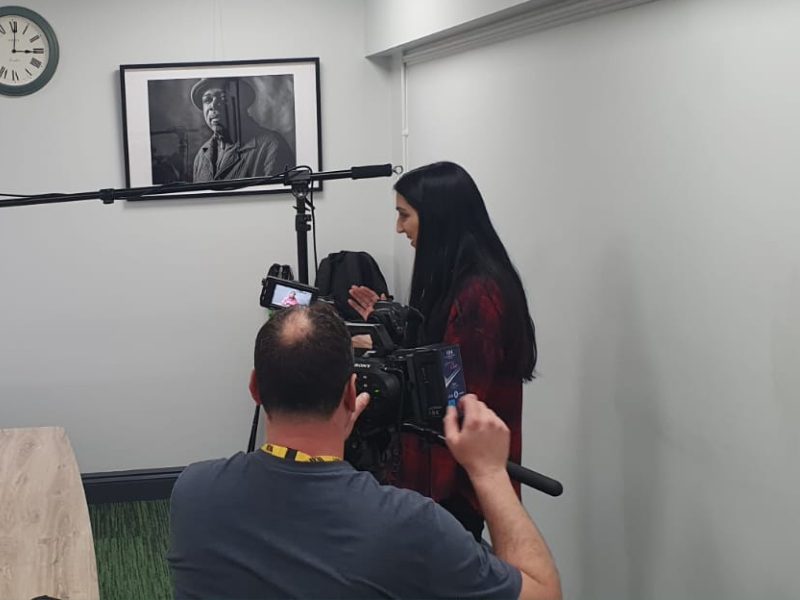
Over two days here at WM College, alongside our external photographer Matt, we had the exciting chance to explore the college, taking photos and videos of classes and chatting with our adult learners. Every visit showed the college’s focus on offering education for everyone, no matter their background or skill level. Here’s what we experienced: 

Day 1: Tuesday 

We began taking photos with the Supported Learning: Health and Wellbeing class. Here Maria guided her adult learners through activities to boost mental and physical health. The class felt warm and welcoming. It encouraged everyone to take part and relax and engage in sensory activities.

Next, we captured moments from Advanced Printmaking. Printing tutor Sisetta helped learners refine their artistic skills through printmaking. It was exciting to see their designs come to life. After that, we visited Jewellery and Silversmithing. Here Petra’s learners worked on crafting unique pieces. Their focus and attention to detail were inspiring. 

Later, we stopped by Piano and Keyboard – Beginner, led by Rupert. The room was full of music as learners were taught basic chords and melodies. A lovely example of the college’s commitment to building new skills in a friendly space. 

Around midday, we met three inspiring Camden adult learners—Leila, Chaza, and Sara. They shared how WM College had shaped their learning journeys. Their gratitude and passion for learning were clear. 

We continued with a visit to the Choir, led by Diana. The group, a mix of beginners and experienced singers, created beautiful harmonies that reflected the inclusive spirit of the college. Later, we saw lively discussions in English Functional Skills Level 2 with Sarah. Here adult learners improved their language skills to better engage with their communities and workplaces. 

The day wrapped up with visits to ESOL – Entry 3 with Venera, Drawing and Painting – Portraiture with Alison, and Location Recording, Foley, and Sound Design with Cordane. These classes showcased the wide range of courses WM College offers, proving there’s something for everyone—from language learners to artists and sound engineers. 

Day 2: Wednesday 

The second day started with Maths Level 2 and GCSE (Foundation) with Asaph. The class was buzzing with problem-solving and teamwork, showing how WM College equips learners with essential skills for success. 

We visited Barry’s Supported Learning: ESOL – Beginner class, where his learners were working hard to improve their English. Next, we dropped by Etching, Photo Etching, and Relief with Anna, where learners were creating intricate artwork. 

We also stopped by Wood Carving with Roli and Clothesmaking – Beginners with Natasha. These classes highlighted the sense of community at WM College, with learners and tutors supporting each other every step of the way. A true example of how everyone is treated like an adult here and tutors act as guides and champions.  

Later, we joined Francesco’s Computer Skills – Improvers class, where students worked on improving their digital literacy—an essential skill today. The day ended with a visit to Film & Television: Level 2 Creative Media with Jorg, where budding filmmakers worked on creative and technical projects. 

In the afternoon, we visited the college’s beautiful library. Here, community adult learners from Fitzrovia, part of our community courses, were enjoying a visit to WM College. They were proud to see their work on display and continued their crochet project in the warm, welcoming space. 

The day ended by talking with more inspiring learners. These included Ana, Mercedes, Bohdana, Tomomi, Tracey, and Paul. We also spoke with staff members Barry and Francesco who teach Bookkeeping and Computing. All their stories showed how WM College empowers and supports adult learners from all walks of life. 

Inclusivity in action 

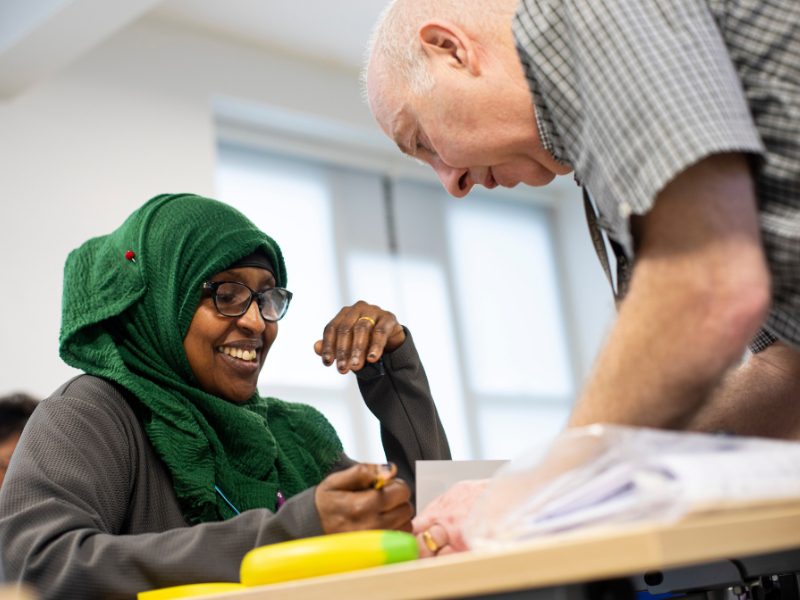
Our two-day journey showed us how WM College champions inclusivity. The college offers a wide range of courses to suit all interests and skill levels. It also fosters a welcoming environment where everyone feels supported. 

WM College is more than a place of learning. It’s a community where everyone is valued and given the chance to succeed. 
Thank you to everyone that let us invade their learning world and who took the time to speak with us. It was a really special two days.

Jenny – head of marketing and comms, WM College
Pri – senior marketing officer, WM College

Learn more about what we offer here.

Don’t miss our upcoming Summer School and Open Evening, where you can explore our wide range of courses, meet our tutors, and see our fantastic facilities in action. Come and experience the welcoming WM College community for yourself!

HOLEX Urges Secretary of State Bridget Phillipson to Address Concerns Over 3% Cuts to Adult Skills Fund

Adult education is a cornerstone of a strong economy, a skilled workforce, and an inclusive society. Yet, with the recent 3% cut to the Adult Skills Fund, the future of lifelong learning is at risk. Dipa Ganguli, CEO of WM College and Chair of HOLEX, shares her concerns about the impact of these cuts and the urgent need for action:

“As CEO of WM College and Chair of HOLEX, I want to stress the key role adult education plays in boosting the economy, building the workforce, and fostering social inclusion. The recent 3% cut to the Adult Skills Fund (ASF) is alarming and threatens the future of lifelong learning. At a time when skills development is crucial, this cut comes as a huge setback. 

Adult education has already faced serious financial pressure. This includes a 40% budget reduction since 2012 and no inflation adjustments for 14 years. The lack of communication about the cuts has only increased the sector’s uncertainty. 

If these cuts move forward: 

  • Over 80,000 adult learners may lose access to courses that help address skills shortages. 
  • More than 3,000 teaching staff could face job losses. 
  • Many adults will struggle to gain new skills. This will slow economic growth and put more strain on public services. 

This decision goes against the Government’s commitments: 

  • Workforce growth and skills development –Many industries rely on adult learners moving into skilled jobs. 
  • DWP’s employment initiatives – Training providers are needed to support employability, yet cuts make this harder. 
  • NHS and social prescribing – Adult education helps with mental health and wellbeing and actively saves the NHS money and yet resources are being cut. 

We urge the Department for Education to: 

  1. Explain why these cuts were decided and why adult education was targeted. 

2. Provide a clear plan for future funding so providers can make sustainable plans. 

3. Recognise the importance of adult learning and reverse these cuts before long-term damage. 

The UK’s future relies on a skilled workforce. Reducing funding for adult education works against this goal. I ask the Secretary of State to support Caroline’s letter and engage with the sector. Work with us to find solutions to protect learning opportunities and ensure a skills-driven recovery. 
 
The decrease in funding and recent cuts mean we are finding it harder to offer the same range of courses without raising fees. With less Government funding, we must pass on some of the costs to our learners. Unfortunately, we will also have to reduce the concessions we offer due to a drop in subsidies. This comes at a time when the need for more accessible skills training is greater than ever. 

WM College and HOLEX members are committed to working with the government to build a strong, flexible adult learning system that meets the needs of both learners and employers and supports our society for the better.   
 
Both I, SLT, your governors and connected supporters will continue to work with HOLEX and other adult learning colleges to fight for both our existing and future staff and learners.”

Want to help?

Please like, comment, or share this message, also available here on our social channels. You can also contact the Department for Education, the Mayor of London, or your local MP to share your thoughts. Thank you for your support!  

Is it time for a national ESOL strategy in England?

In a recent article for FE Week, Ziya Moustafa, Director of Learning at WM College, highlights the urgent need for a funded National ESOL strategy in England. Ziya reflects on his time as an ESOL tutor during the optimistic 2000s. In the past, reports such as the Moser Report (1999) and the new Adult English, Maths, and ESOL curricula aimed to improve literacy and language skills nationwide. However, 25 years later, the same needs persist.

The changing landscape

The Leitch Review of Skills (2006) changed funding to focus on vocational training. This shift hurt many adult ESOL learners, especially those with fewer resources. Today, devolved Adult Education Budget (AEB) funding from the Greater London Authority (GLA) and mayoral combined authorities (MCAs) is helping address local ESOL needs. However, despite this flexibility, a 56% decline in AEB funding from 2009-2017 constrains innovation and course variety.

Current challenges

The Government recently announced £50 million for pay rises in 16-19 education. However, this again left out adult education. As a result, resources and recruitment efforts for providers like WM College are still limited. Research shows that learners with no English may need up to 14.5 years to reach job-level skills. This means many adults are still far from their employment goals.

At WM College, adult ESOL courses aim to teach practical language skills. These skills help with social connections and enhance wellbeing. Ziya also emphasises the importance of providing qualifications and building learners’ social and cultural capital. Something he and his team see as a high priority for their adult learners here in the heart of London.

Looking ahead

Ziya believes we need to innovate and truly support adult learners. So, he argues for funding that offers flexibility. This funding should help ESOL courses tackle the complexities of adult learners’ lives.

Without proper investment, adult ESOL learners might fall behind, increasing the socio-economic gap. Ziya states that it is time for the government to act and ensure all adult learners can access the education and support they need to thrive.

WM COLLEGE
44 Crowndale Road
NW1 1TR
Tel: 020 7255 4700
Email: learnerservices@wmcollege.ac.uk