Open Web SearchOpen Mobile SearchOpen Mobile Menu

Portrait(s) of Camden: A landmark Camden community art celebration at WM College

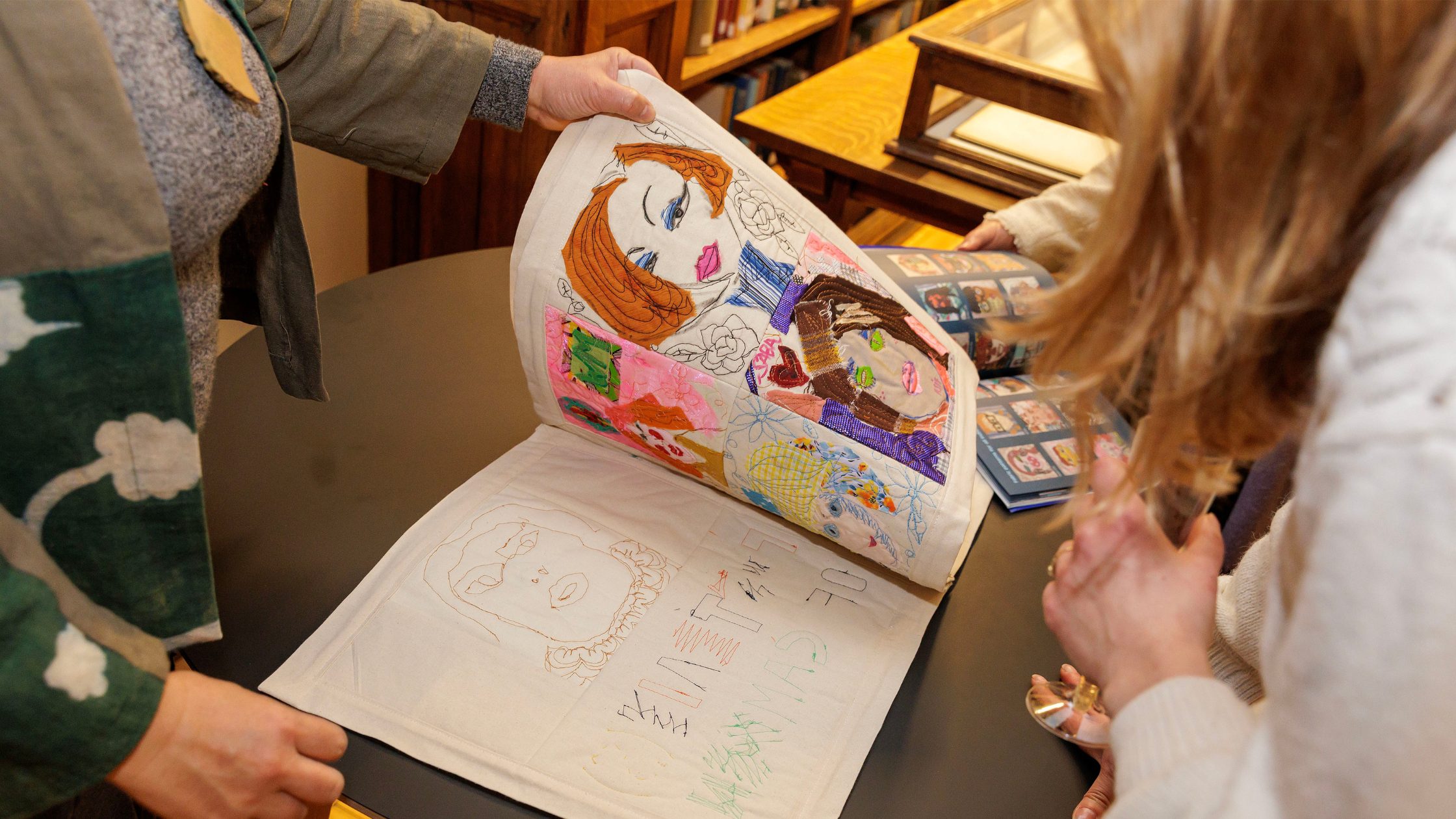
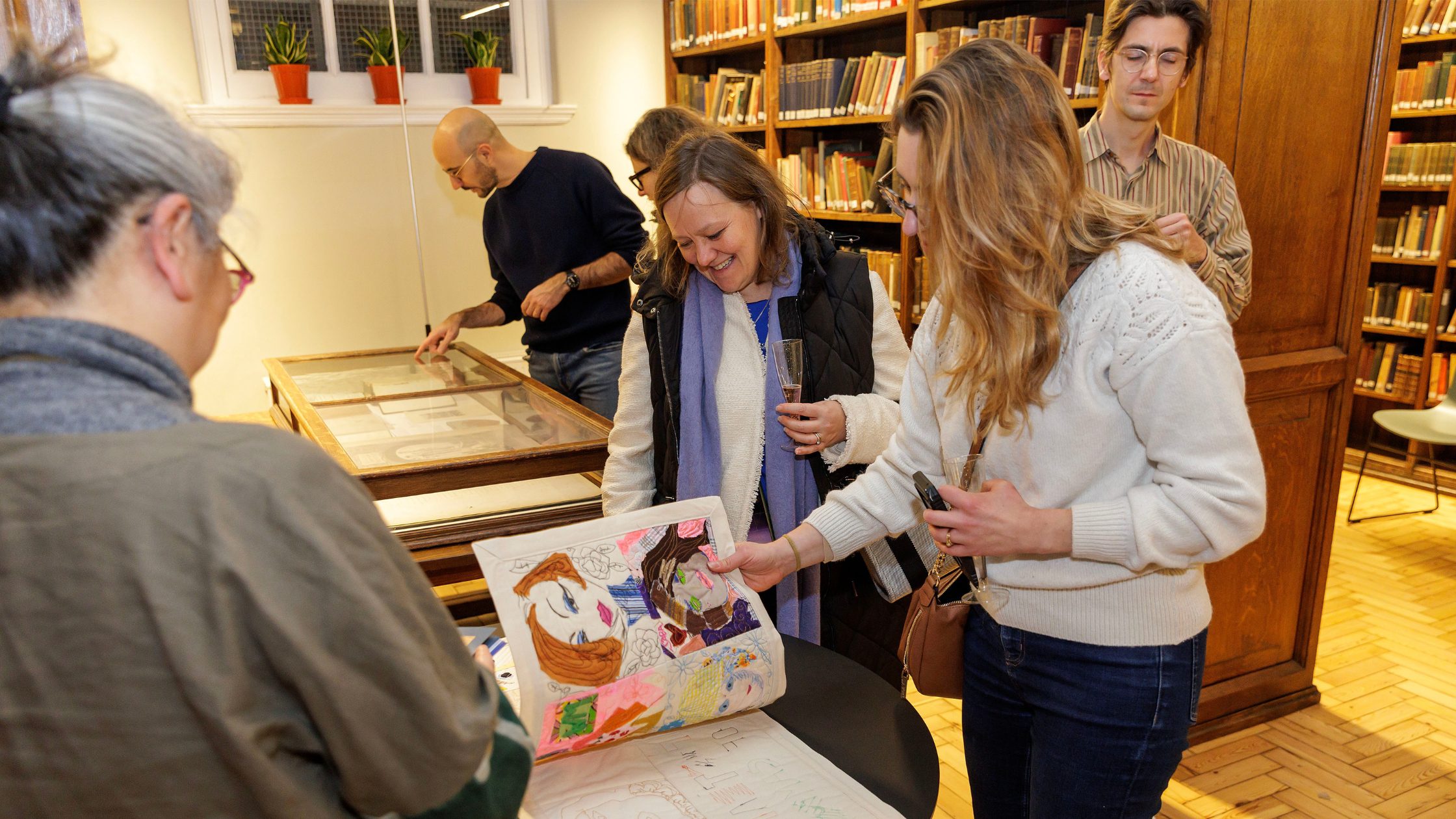
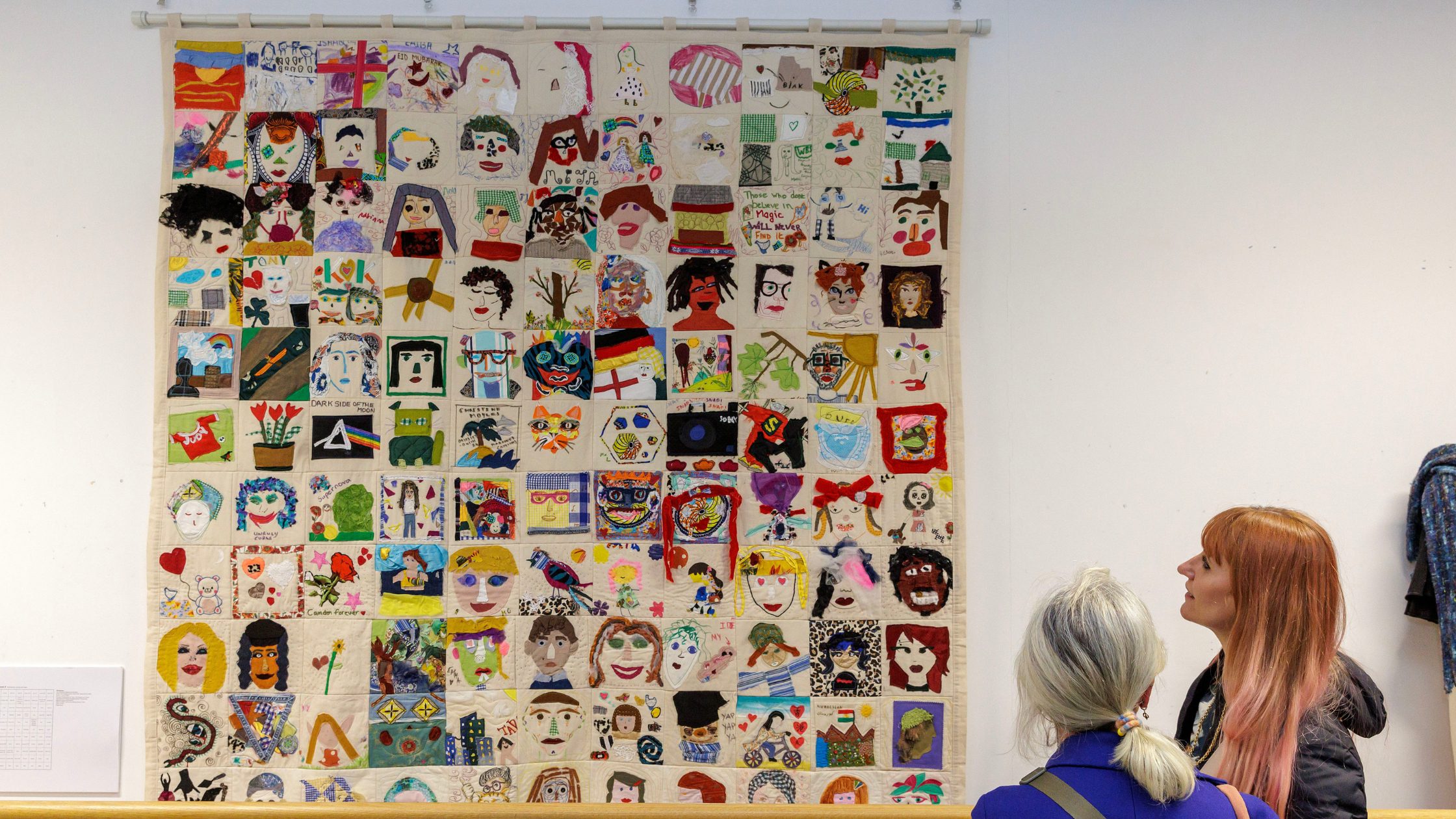
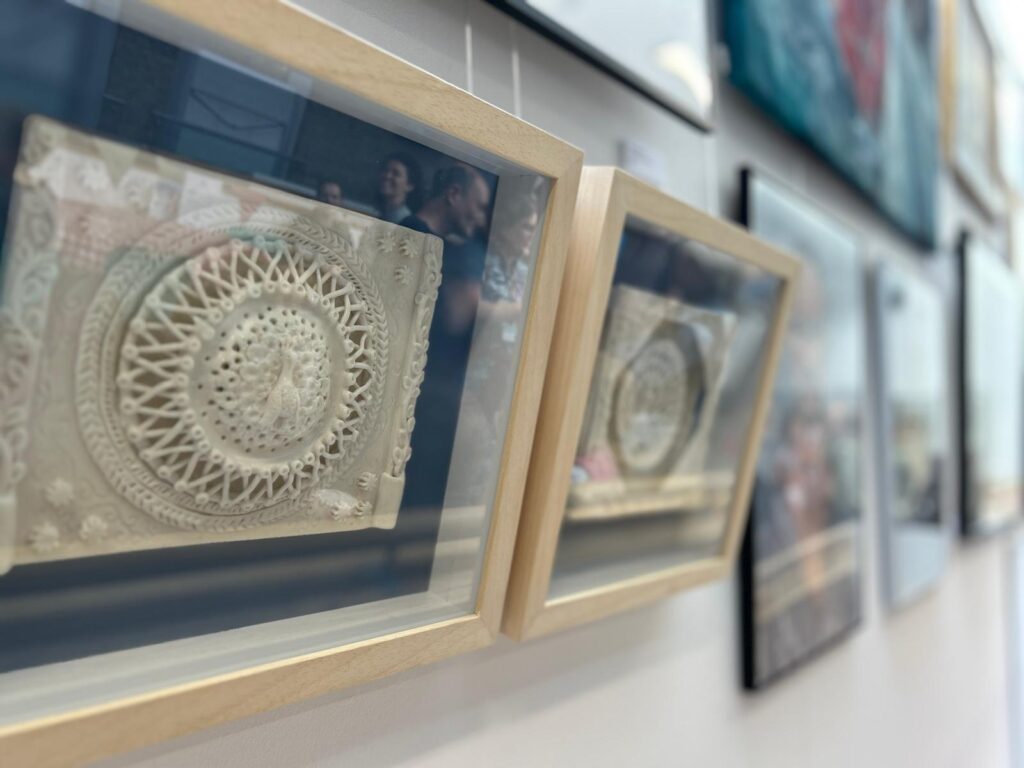
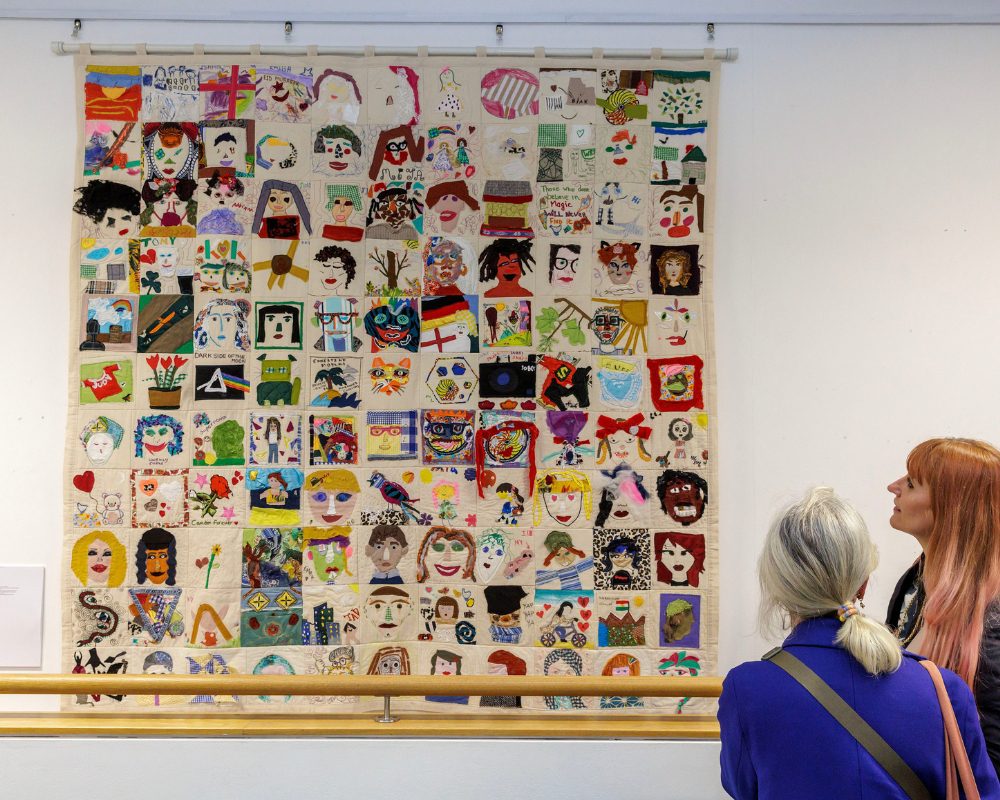
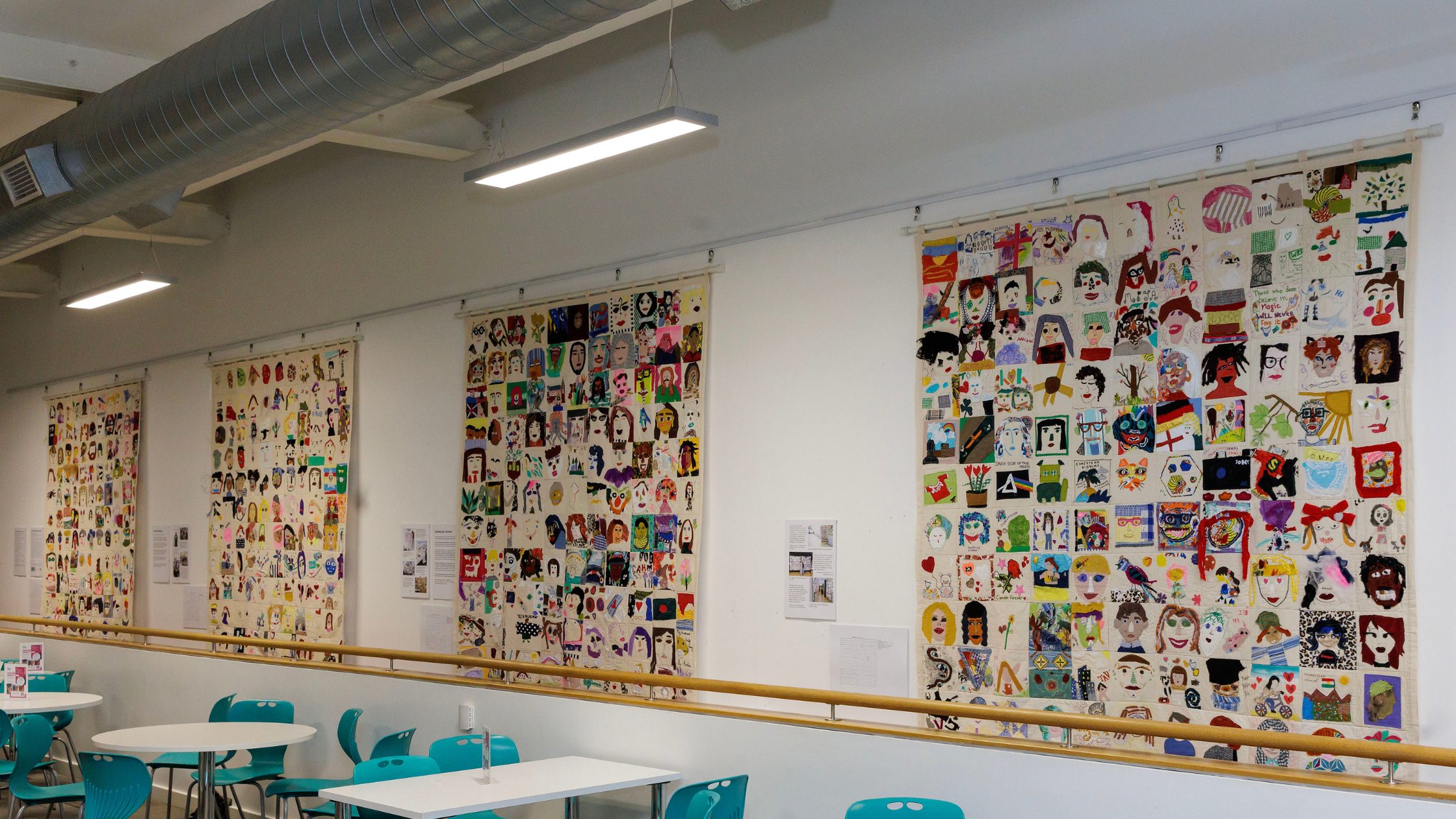
WM College proudly hosted the launch of Portrait(s) of Camden, one of the borough’s most vibrant community art collaborations to date. Bringing together 500 fabric portraits made across 20 workshops, the project stands as a powerful celebration of Camden arts, storytelling and shared creativity. 

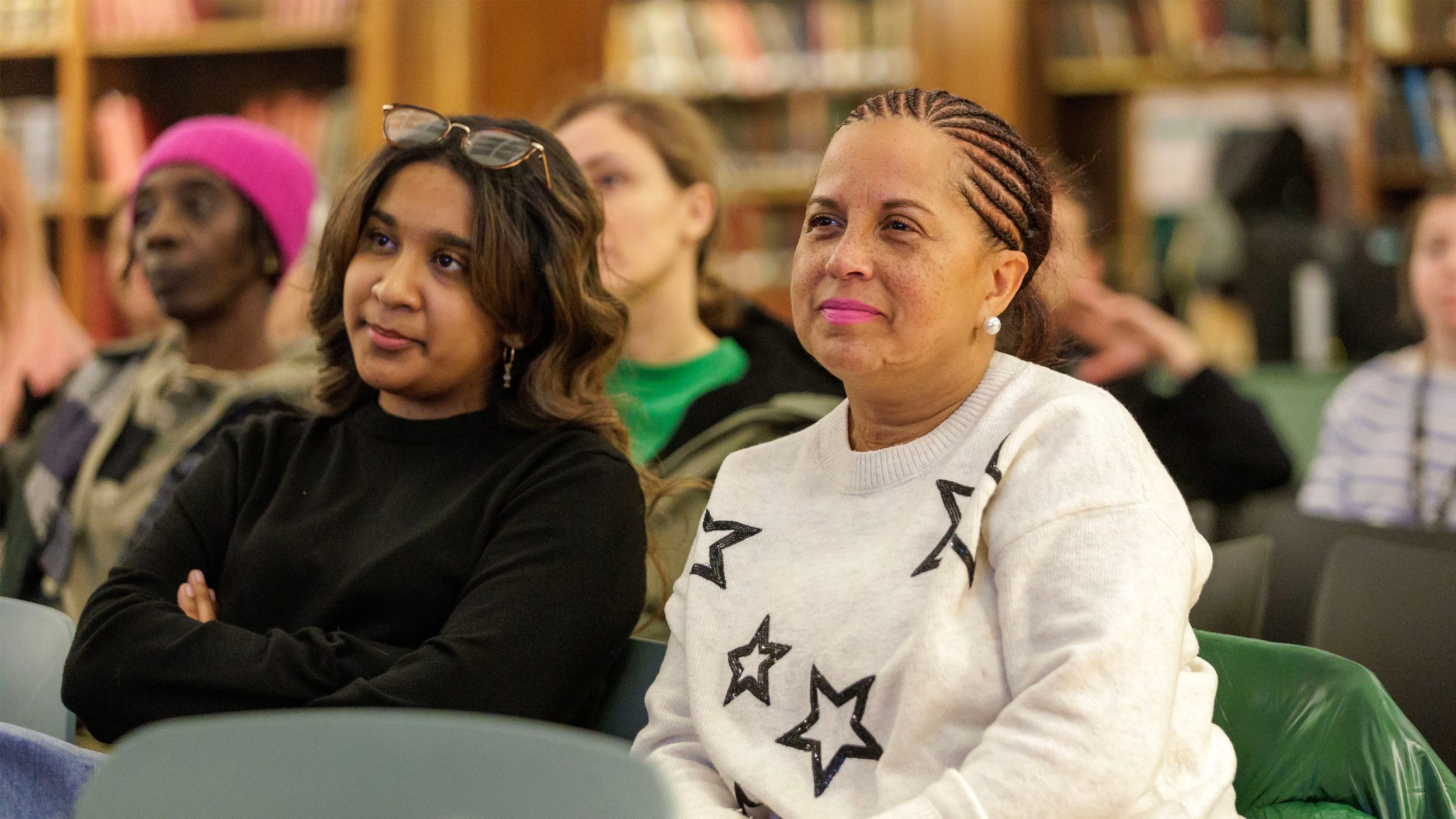
Live guitar music from WM College learner Peter set the tone for the evening. His reflection captured what many guests felt: 

“It was a wonderful event, both moving and uplifting… The quilts are a stunning testament to what can be achieved when people of diverse backgrounds, ages and experiences come together as one.” 
53

53

A Camden arts project born from the Community 

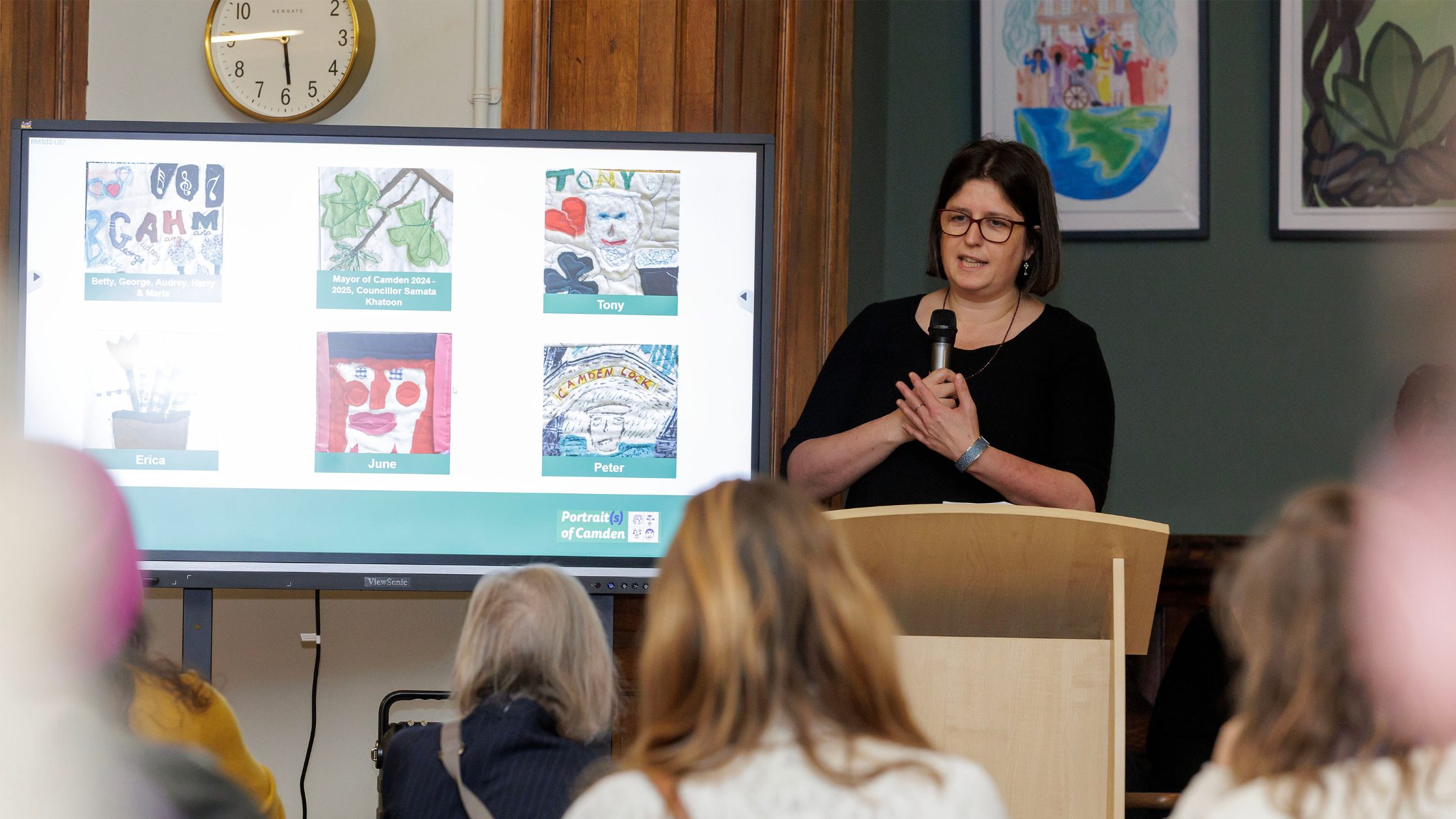
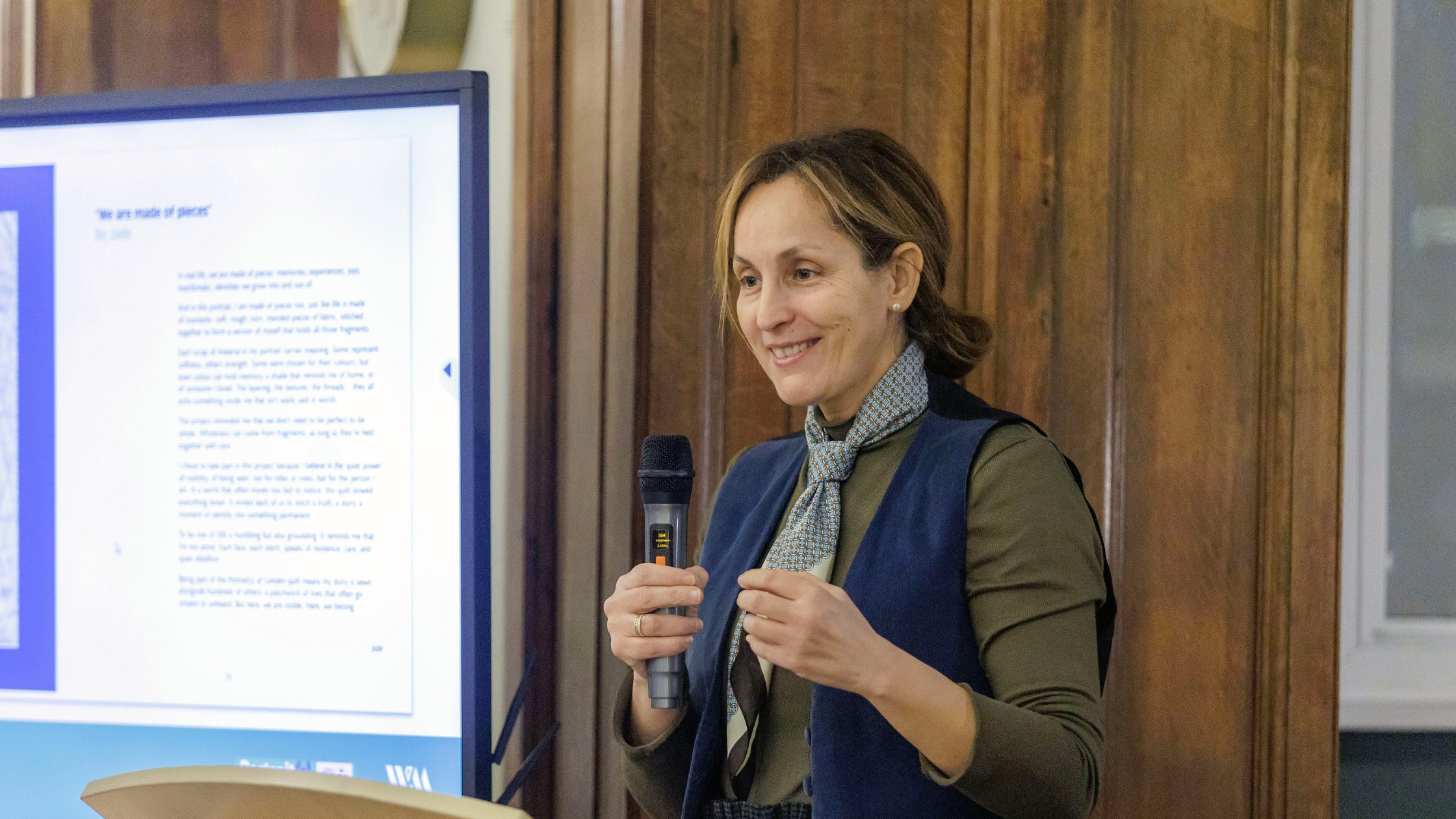
The launch opened with a warm speech from Kathy, our Curriculum Manager for Fashion, Textiles, Art and Design at WM College. Kathy described how a simple conversation in early 2023 grew into a major Camden arts project anchored in creativity, accessibility and community connection. 
 
A project that concluded with: 

  • 500 individual fabric portraits 
  • 20 community workshops across Camden 
  • participation from schools, charities, cultural partners and resident groups 
  • And a focus on textiles as a form of activism and cultural expression 

The project also reflects WM College’s commitment to nurturing inclusive, community-centred arts practice and supporting Camden’s diverse creative landscape. 

Camden community art in action: Joana Monteiro shares the journey 

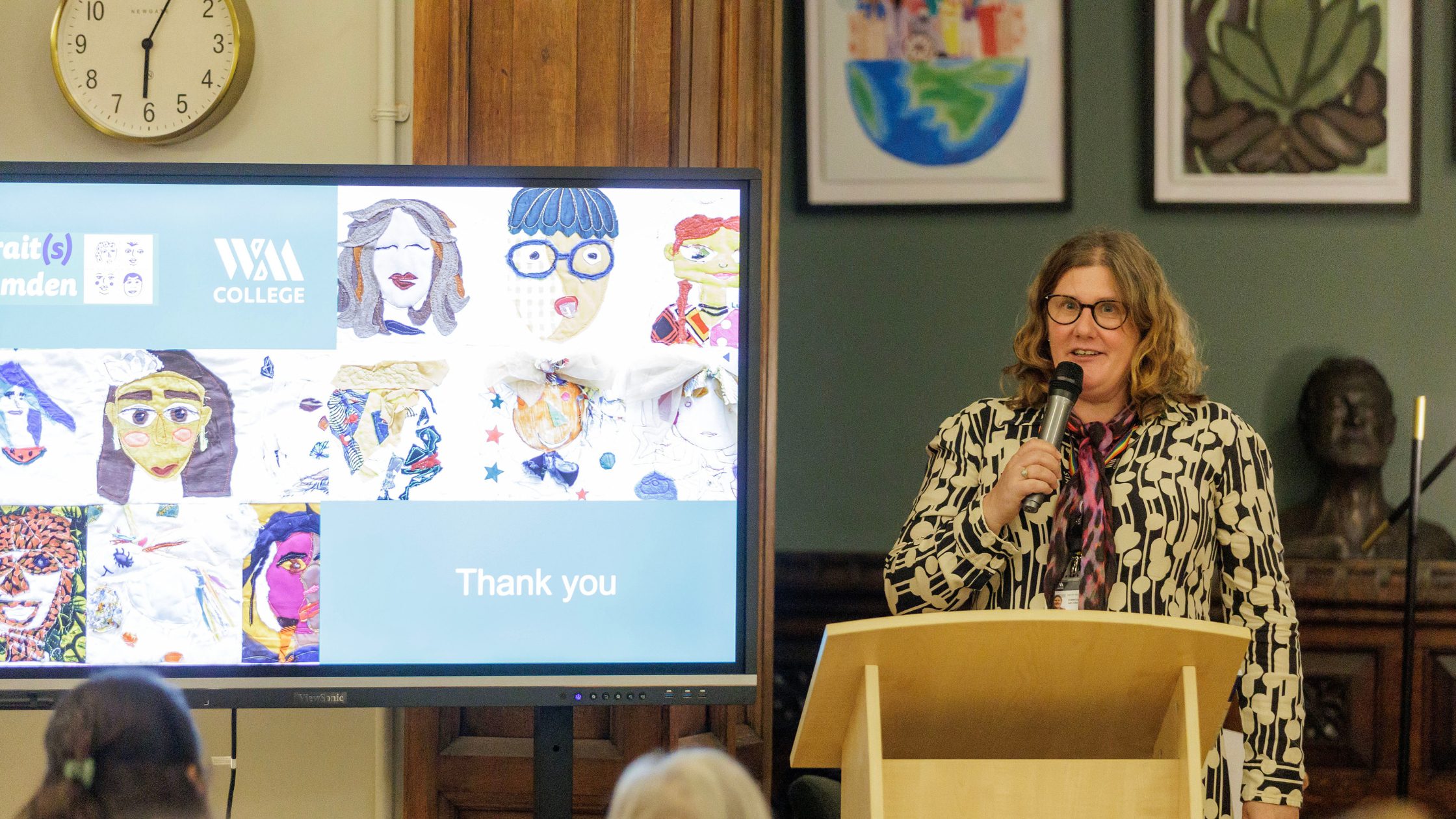
Project lead Joana Monteiro gave a heartfelt insight into the scale and spirit of Portrait(s) of Camden. She thanked the many organisations involved, including Camden Giving, Talking About Our Generations, Forum+, The London Irish Centre, local schools, and intergenerational groups across the borough. 
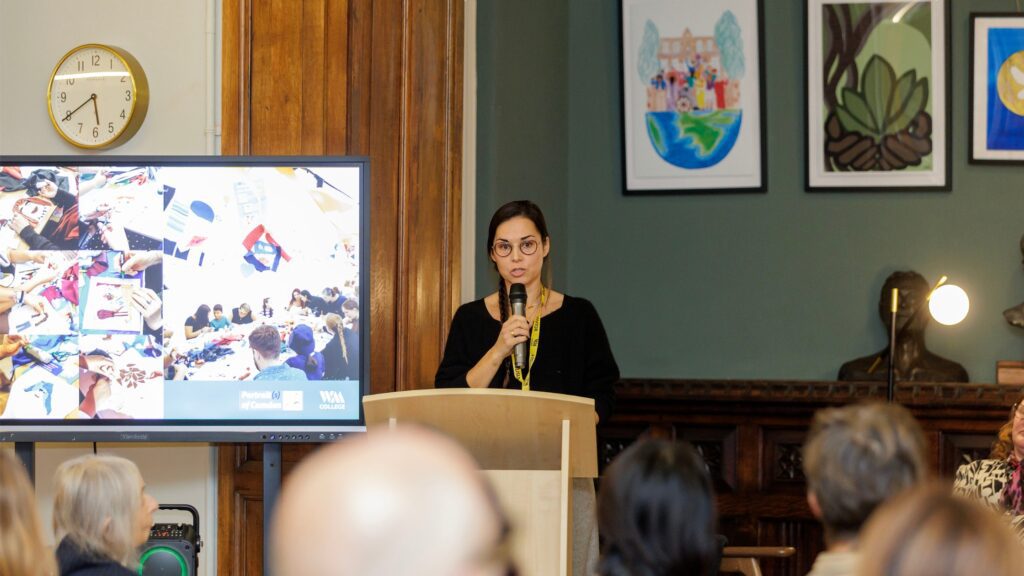
Joana beautifully walked the room through how this Camden community art project created safe, joyful spaces for cross-generational connection, self-expression and storytelling, confidence-building and skill-sharing and celebrating the cultures and identities that make Camden unique. 

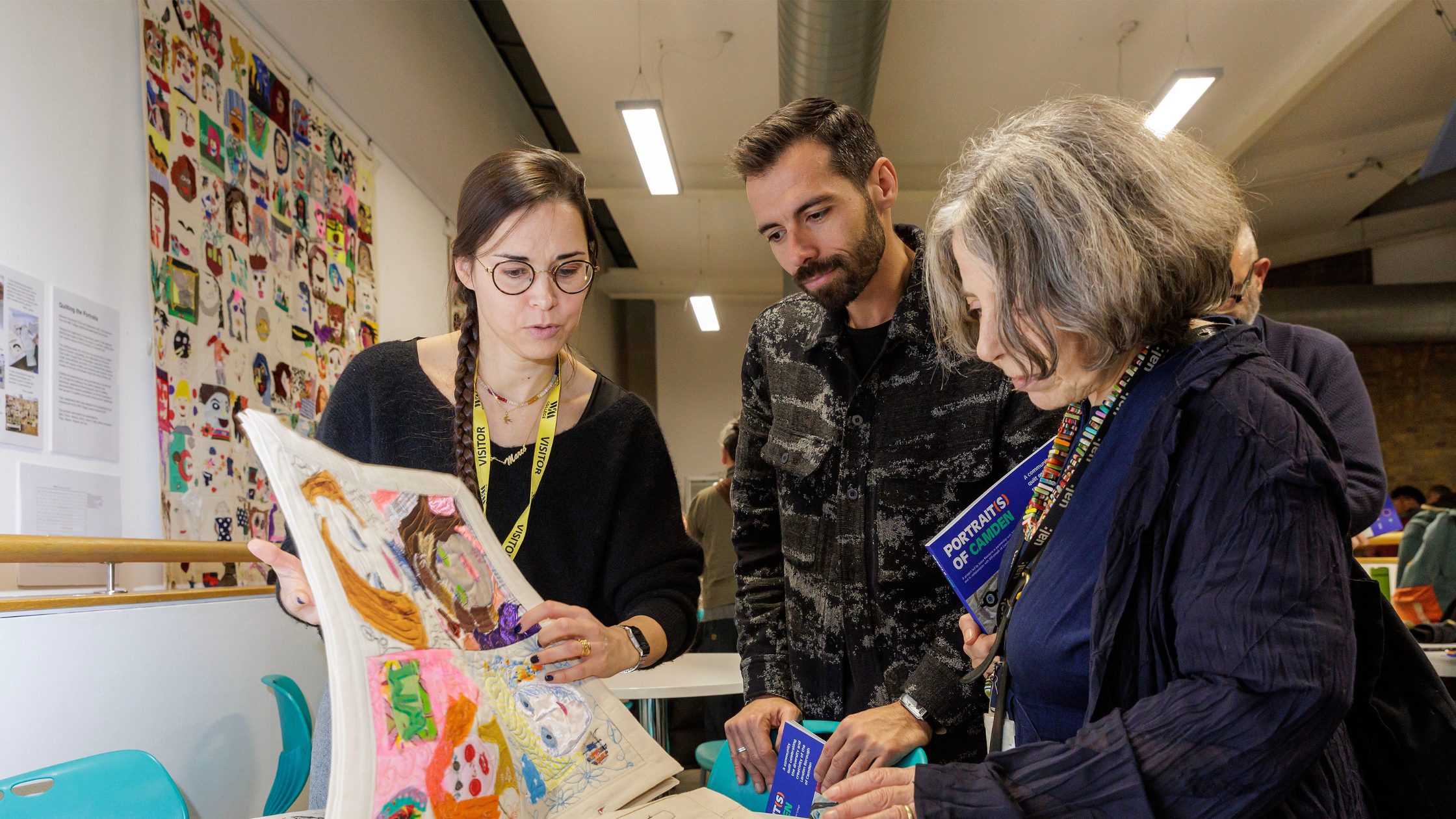
Each portrait reflects a personal story – from music and football to heritage, family and memories of home.  
 
One especially moving contribution came from Chnar, who stitched the mountains and rivers of Kurdistan, reconnecting with her homeland through the process. 

Quilters who stitched Camden together 

WM College quilter Midori spoke about the creative challenge of quilting portraits made by so many different people. Imagining each maker’s style and personality, she chose colours, threads and techniques tailored to every individual portrait. 
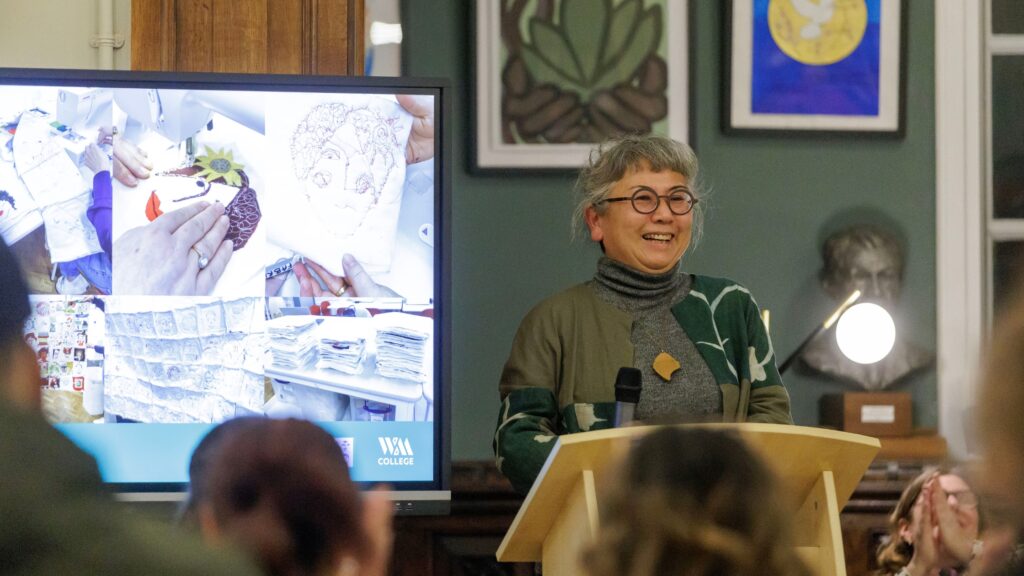
Her thoughtful approach became a core part of the project’s success, contributing to the quilting group winning the 2025 WM College Learner Award for Outstanding Group Achievement.  
 
The work is a beautiful example of Camden community art, bringing people together through craft. 

A Camden arts project with borough-wide impact 

Portrait(s) of Camden has already formed part of significant community celebrations, strengthening its position as a standout Camden arts initiative. The quilt has appeared at: 

  • International Women’s Day with Camden Giving 
  • The Windrush Festival 
  • LGBTQ+ arts workshops with Forum+ 
  • Events at The London Irish Centre 
  • The Human Rights Today Festival 

The project continues a long tradition of using textile arts to amplify voices, highlight shared stories and bring Camden residents together through creativity. 

Performances, book launch and a call to Camden 

The evening flowed beautifully with presentations, a book reveal and live performances.

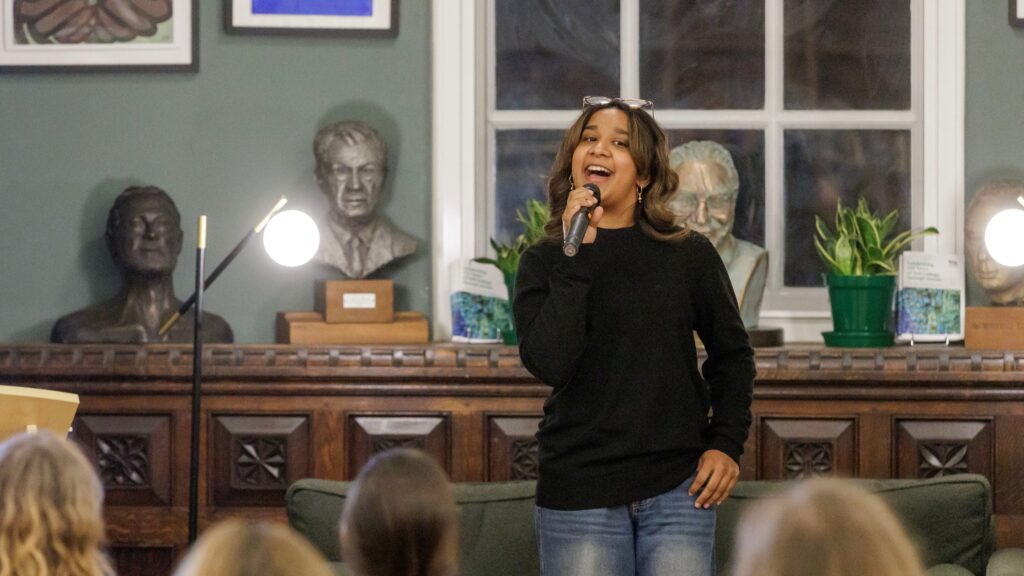
Singer Zara closed the event with powerful renditions of “Read All About It” and “Opportunity,” capturing the project’s themes of empowerment and hope. Despite technical issues with the backing music, her final performance of “Read All About It” stole the show, showcasing her resilience, warmth and incredible talent, and reflecting the true spirit of WM College.  
What’s next? 

The quilt is meant to travel, inspire, and continue building connections. 
As Kathy reminded guests, it is portable, community-driven, and ready to be exhibited across Camden. 

Schools, libraries, community centres, cultural venues, and local organisations are warmly invited to host Portrait(s) of Camden. 

To conclude the celebrations, visitors were invited to: 

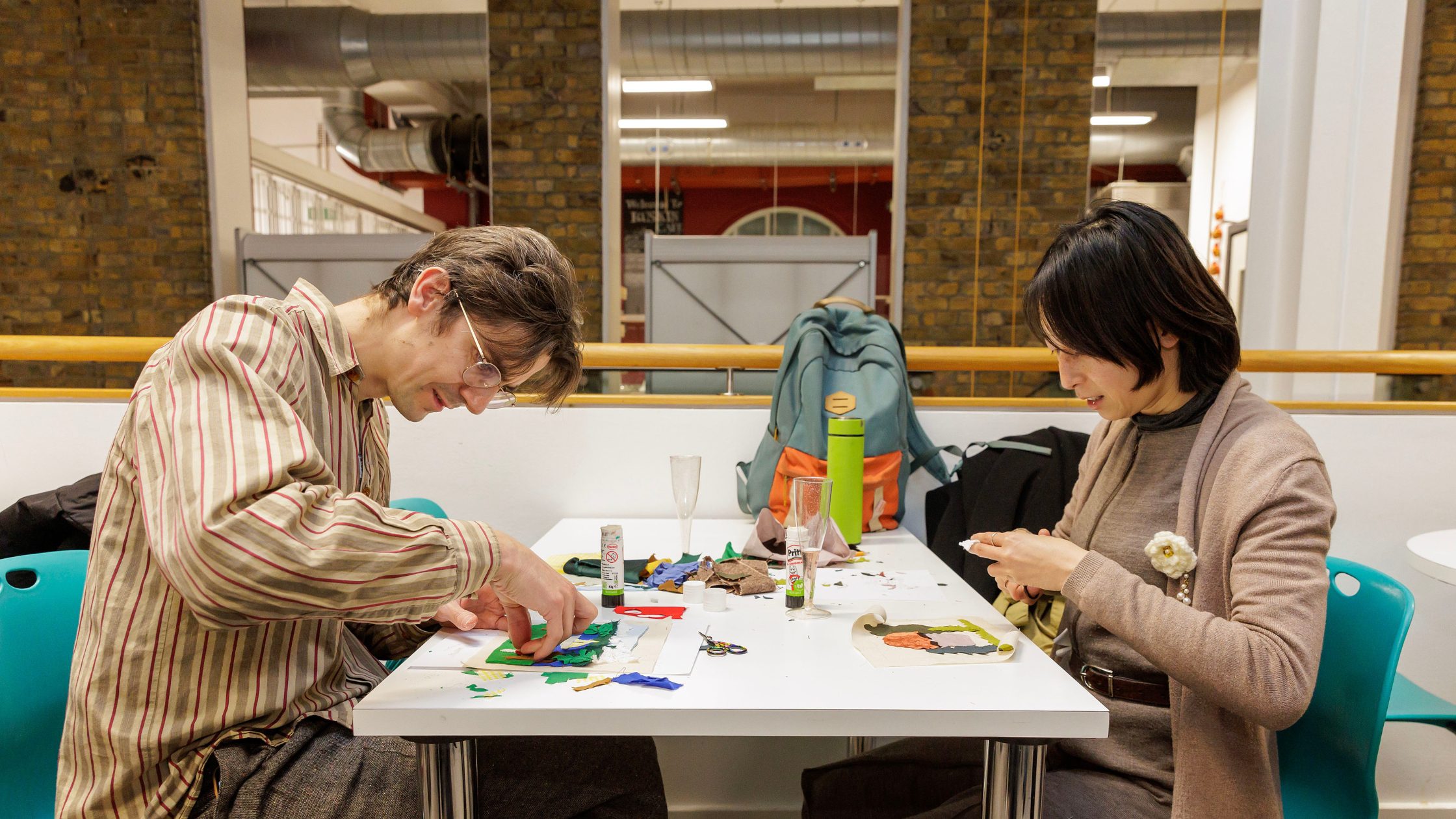
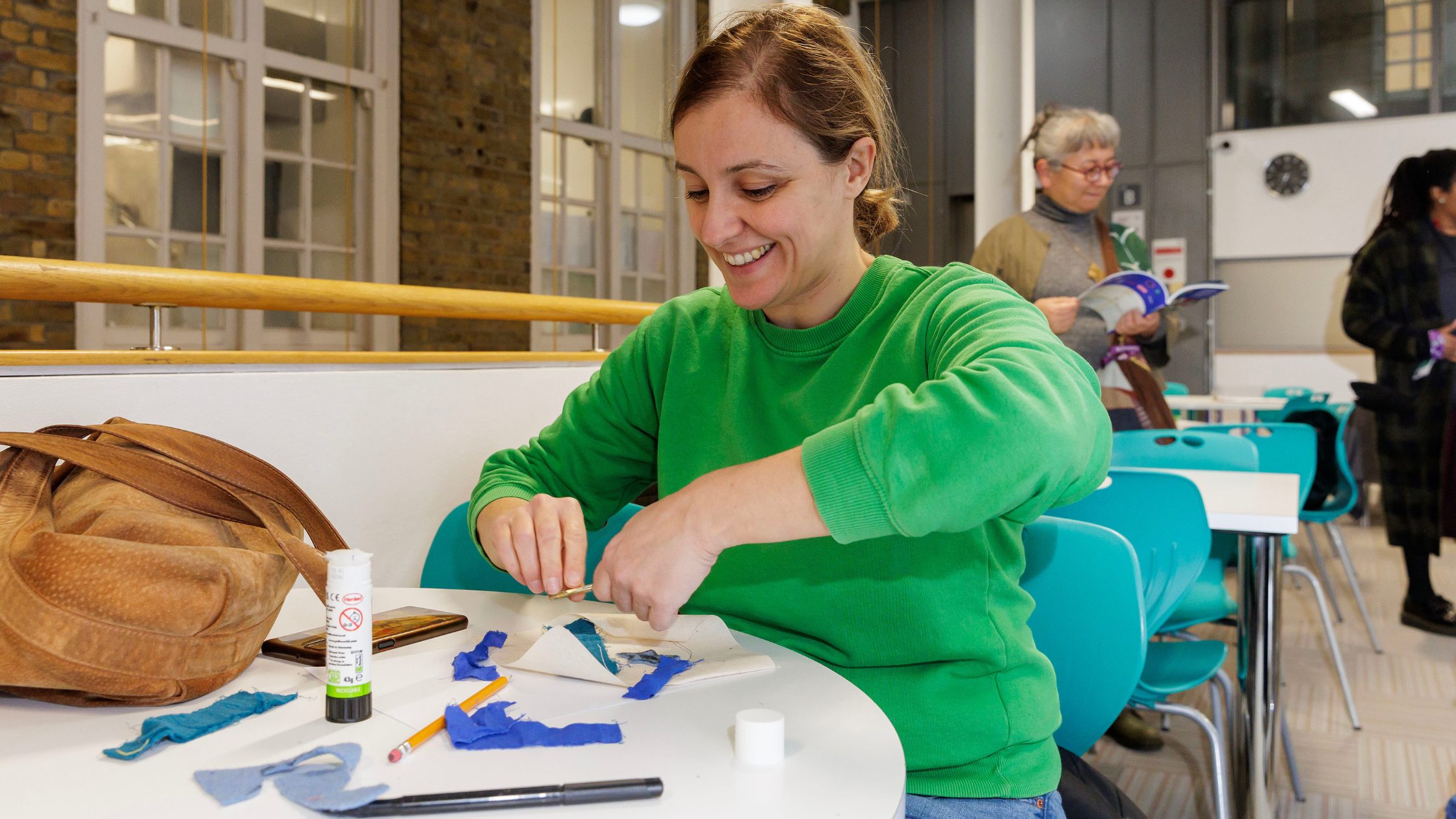
  • Create their own portrait in a drop-in workshop 
  • Join future winter workshops in the library 
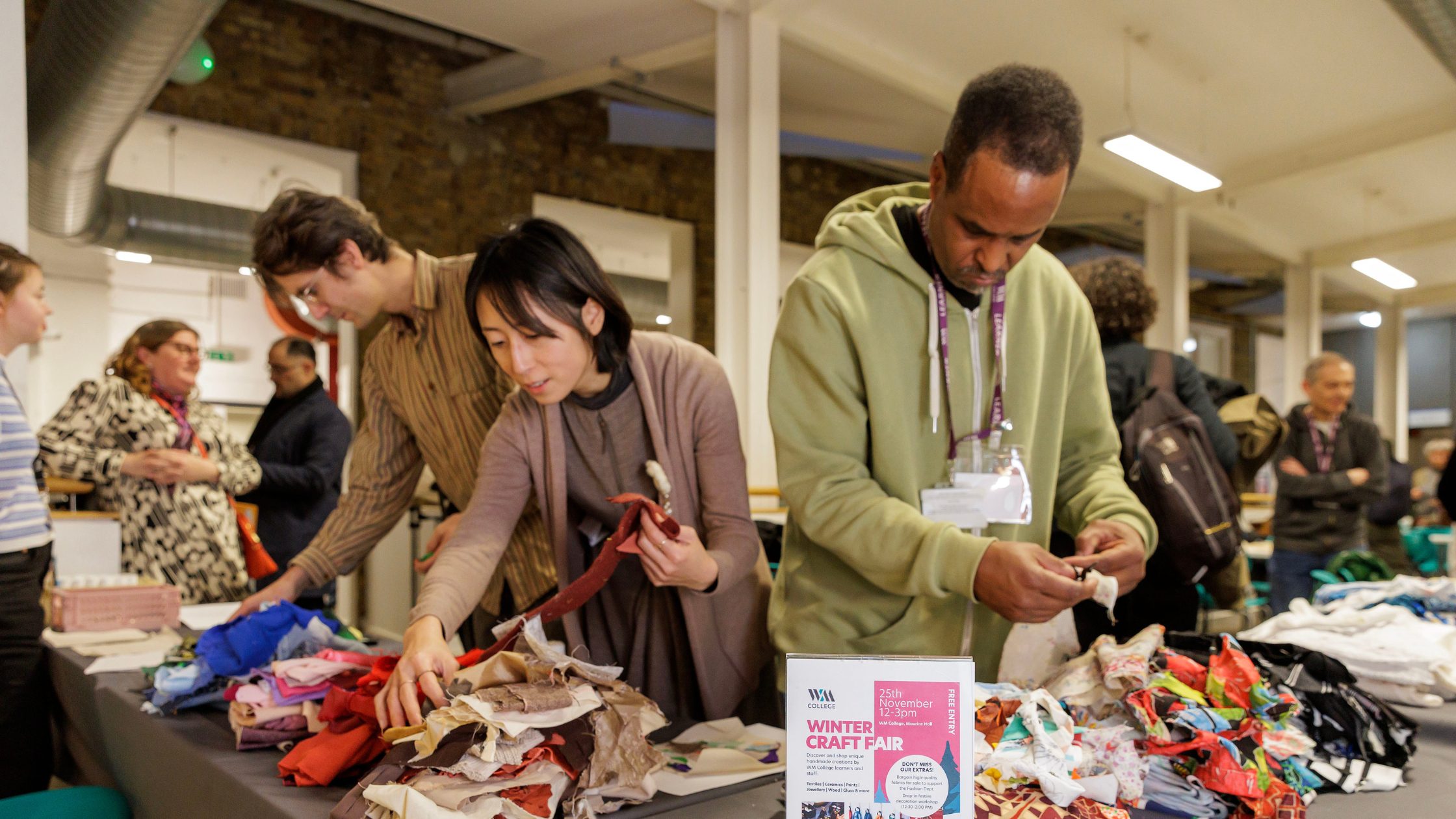
  • Visit the WM College craft fair 
  • Bring their own group for a bespoke creative experience

The quilts now stand as a collective portrait of Camden- vibrant, diverse, resilient, and deeply connected. They remind us that every story matters, and when stitched together, those stories create something powerful enough to transform spaces and bring people closer. 
A learner’s plea for fair funding for adult education

As part of their learning this term, our ESOL, English and maths learners have been exploring how to engage with local and national decision-makers. In the lead-up to this week’s lobby of Parliament, they have written to their MPs to share why adult education matters to them and to their communities. 

One of our ESOL learners, Maimuna, chose to write directly to the Prime Minister. Her letter captures the life-changing impact that adult education can have and why investment in it is so urgent.

“Dear Sir Keir Starmer

I am writing kindly to ask you to review the funding on adult education. Adults education is really important for individuals growth, economic opportunity, as well as for community and society.  
 
To get adult learning participation back to 2010 levels, we would need at least £5 billion in extra funding. This amount does not even cover the larger skills gap identified by Skills England. 

We urgently need to move money away from expensive, inflexible programmes and invest in approaches that actually work – ones that are local, inclusive, and help people get involved again, build confidence, and move into stable jobs. 
 
Adult education has shaped me in ways I will never forget. Without it, I honestly don’t know where I would be today.  
 
When I first came to this country, I didn’t know a single word of English. Every day felt like a struggle. I depended on translators for even the simplest things. When I was pregnant with my first baby, I had to ask someone to come with me to every appointment, or hope my GP could find a translator, just so I could understand what the midwife was saying. Even ordinary moments felt overwhelming. 
 
But everything began to change when I joined my local ESOL class a few months after arriving in the UK. Thanks to the funding for adult education, I was given a chance – a chance to learn the language, to find my confidence, and to build a new life.  
Step by step, I discovered my own voice. And because of that, I was able to raise my children with opportunities I never dreamed of. Today, they are studying to become doctor and engineer- something that fills me with pride every single day (contributing back to the UK economy and society). 
 
Adult education does more than teach skills. It transforms lives. It creates a culture of lifelong learning, where parents, families, and entire communities begin to value education. It sends out a ripple of hope that can touch generations. 
 
Every pound that goes into adult education returns to the country and society as multiplied through stronger families, confident parents, and children who dare to dream bigger and get  the country to move forward.  
 
I urge you to lobby for improved investment in adult education so that people in our community can access the opportunities they need. Thank you for your attention to this important matter. 
 
Yours sincerely  
MM ” 
 

Join us in championing adult education

Maimuna’s story is echoed by thousands of adults across the country who have rebuilt their confidence, skills, and futures through accessible, community-rooted learning. Their voices underline a simple truth: investing in adult education is investing in stronger families, thriving communities, and a more resilient economy. 

As we head to Parliament, we stand alongside our learners in calling for fair, sustainable funding that gives every adult the chance to learn, progress, and contribute. 

Join us in championing adult education – whether by writing to your MP, sharing your support on social media, or standing with us on the day. 
 

Inspired by this?  

Help our work by donating today 

Or help by booking onto our full cost art courses and say yes to gift aid. (enjoy learning and give the gift of learning to others) 

Further reading: Why Victorian lessons matter for FE Policy   

Why Victorian lessons matter for FE Policy

Looking back can sharpen how we move forward. In a recent FE Week article Tom Schuller – a former Chair of WM College and long-time Fellow and supporter – argues that lessons from 19th-century adult education remain relevant now. 

Early supporters of adult education created places where craft, languages, debate and the arts sat alongside practical teaching. Their aim was wider than immediate employment: they sought to foster civic participation, curiosity and confidence. These outcomes are harder to measure than a qualification or a job, but they are essential to individual wellbeing and community resilience. 

Today’s policy debates tend to prioritise productivity and short-term metrics. That focus risks sidelining the broader purposes of adult education.
We’ve seen the impact of thinking more broadly. ESOL classes help newcomers build language skills and a sense of belonging.
Across the arts and humanities, learners gain creative expression that supports wellbeing and strengthens civic voice.
Meanwhile, vocational programmes open routes into work while also developing confidence and self-belief.

Tom Schuller’s reflections invite educators, funders and decision-makers to value education’s social and human returns alongside economic ones. Long-term commitment matters too: institutions are built over decades, not in single funding cycles. Sustained investment in people and places creates learning spaces that change lives. 

As our College Principal and CEO, Dipa Ganguli, states: “At WM College, the past isn’t something we look back on with nostalgia – it’s a practical guide for how we serve our communities today. When adult education balances skills, creativity and a sense of belonging, it strengthens individuals and the places they live. Protecting that balance is essential if adult learning is to remain relevant, humane and resilient in the years ahead.” 
 

This Wednesday – Championing Adult Education in Parliament 

The values the College was founded continue to guide us today. This Wednesday (11 am–2 pm), WM College learners and staff will join a lobby of Parliament in Parliament Square organised by the London Region UCU, supported by principals and CEOs from adult education colleges across the capital. 

Held just ahead of Budget Day, the lobby calls for renewed investment in adult learning –  funding that recognises its social, economic, and community value. 

“Investing in adult education isn’t just about courses – it’s an investment in our economy and society,” says Dipa Ganguli, WM College Principal and CEO. “When learners gain skills, confidence, and a sense of belonging, they contribute to stronger communities, improved wellbeing, and reduced pressures on public services like the NHS. High-quality adult learning also supports the skills our economy needs to grow and compete globally. That’s why we are taking our message to Parliament: society and the economy both benefit when adult education is properly funded.” 

Learners from our ESOL, English and maths programmes will be taking part as an active element of their studies. In recent weeks, these groups have written to their MPs, shared their experiences of adult learning, and prepared to report back on the day when they return to college.

Their energy and commitment embody the very values Tom Schuller highlights in his article: confidence, citizenship, and the belief that adult learners deserve a voice in shaping national priorities. 
 
We hope you’ll join us and show your support, from letters to social media.  

Explore new opportunities at WM College 

If Tom’s reflections inspire you to take your own next step in learning, now is the perfect time. Our Christmas short courses and New Year programmes for 2026 are now open for enrolment. Whether you want to develop a skill, try something creative, build confidence, or plan for a new career direction, WM College offers a welcoming space to begin. 

WM College welcomes London School of Mosaic courses

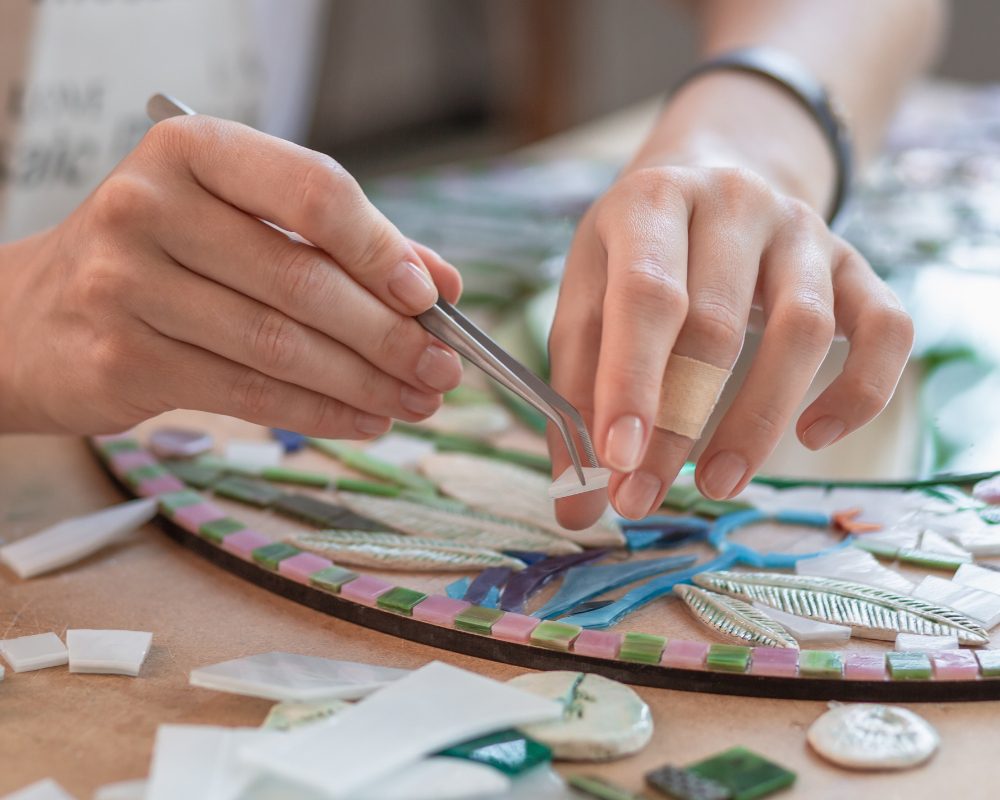
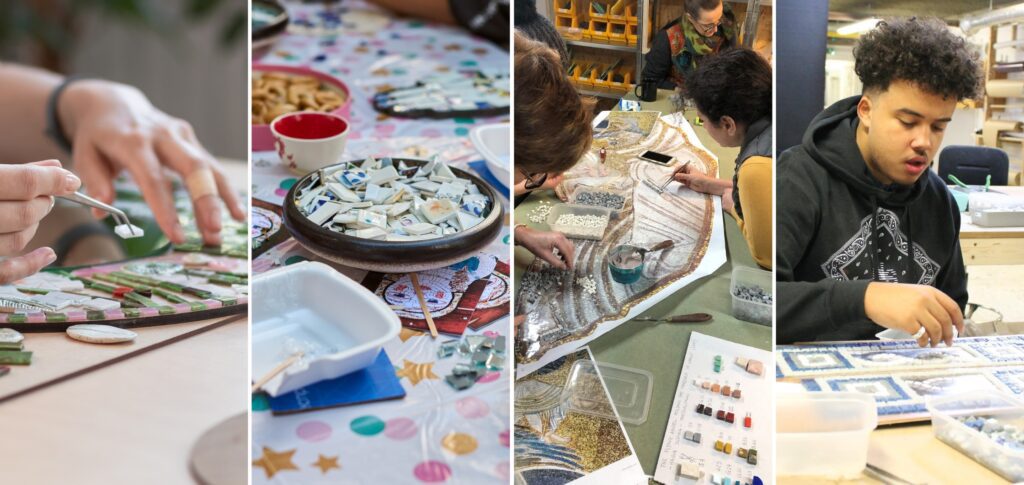
WM College, one of London’s most historic centres for adult learning, based in the heart of Camden, is delighted to announce that it will become the new home for the London School of Mosaics’ popular short courses. 

From February 2026, learners can join a full programme of mosaic courses in London, welcoming both continuing and new students. Courses will be taught by the talented tutors Paula Ligo, Catherine Parkinson, Rada Stilianova, and Debra Collis, ensuring the same high standards and familiar teaching styles that learners have enjoyed at the London School of Mosaic. 

 A perfect partnership for creativity and community 

This collaboration is a natural fit for WM College, whose 170-year history celebrates creativity, craftsmanship, and lifelong learning. 

Earlier this year, the College worked with artist Tessa Hunkin and the Hackney Mosaic Project to create a stunning mosaic artwork marking our anniversary. A symbol of our ongoing commitment to the arts, community, and collaboration. Read more.

“Mosaic is an art form that perfectly captures what WM College stands for – creativity, patience, and community,” said CEO and Principal Dipa Ganguli. “We’re thrilled to welcome the London School of Mosaics’ courses and tutors into the WM College family.” 

Continuing the London School of Mosaic legacy 

Learners who previously studied at the London School of Mosaic will find much that feels familiar. From the tools and materials to the tutors and teaching approach. 

WM College has adopted much of the School’s stock and is proud to continue its commitment to high-quality, inclusive adult education. 

Learners will also join a thriving Creative Arts Department, home to classes in glass, woodwork, ceramics, jewellery, printmaking, fashion, and more, offering countless opportunities to explore new skills and techniques.

Join the next chapter 

Courses begin in February 2026, and early registration is encouraged, as places are limited due to the size of our intimate studios. 
Be the first to hear when course listings go live and enrolment opens. Sign up for updates via our newsletter here.

Frequently Asked Questions 

When will the London School of Mosaic courses start at WM College?

Mosaic short courses will begin at WM College from February 2026. Learners can sign up now to receive updates and be notified as soon as enrolment opens.

Where will the new mosaic courses take place?

All courses will be held at WM College, Camden, London NW1 1TR — a historic adult learning centre with a vibrant Creative Arts Department. 

Who will be teaching the mosaic courses? 

Courses will be led by the experienced tutors Paula Ligo, Catherine Parkinson, Rada Stilianova, and Debra Collis, who previously taught at the London School of Mosaic. 

What level of mosaic classes are available? 

We offer beginner, intermediate, and advanced mosaic courses, including evening, weekend, and intensive project options — perfect for anyone looking to learn or develop their mosaic skills.

Can I continue a mosaic project I started at the London School of Mosaic?

Yes. Where possible, tutors will help learners complete unfinished mosaic projects and continue developing their techniques using familiar tools and materials. 

How do I register for a mosaic course at WM College?

You can register your place by visiting: https://wmc.thedigitaldepot.co.uk/courses/mosaic/8769

Adult learning deserves better: The Post-16 white paper misses the mark 

The Government’s new Post-16 Education and Skills White Paper could have been a defining moment for lifelong learning – but instead, it risks sidelining millions of adults who want and deserve access to education. 

In a 38,000-word document, adults barely get a mention. While the Government says it wants to “level up” skills and “leave no one behind,” community learning, which supports confidence, wellbeing and progression for thousands every year, is barely visible. 

WM College Principal and CEO Dipa Ganguli OBE, who also serves as Chair of HOLEX, has co-authored a new FE Week article with Caroline McDonald, CEO of HOLEX, calling for urgent recognition of the vital role adult learning plays in achieving the nation’s skills ambitions. 

Together they argue that adult and community education providers, including WM College, are key to tackling skills shortages, supporting employability, and helping people rebuild confidence and wellbeing. But funding cuts and a lack of a clear strategy risk leaving adult learners further behind. 

Two key opportunities: Essential Skills Review and Skills Passport 

The article welcomes the Government’s proposed Essential Skills Review but warns it must go beyond English and maths. To truly build a skilled nation, it needs to include language, literacy, digital and numeracy learning at every level – and crucially, give community providers a voice in delivery. 

The White Paper also introduces a Skills Passport as part of the UK’s “Plan for Change.” This could help learners track their achievements – but as it stands, it’s limited to the energy sector. Dipa and Caroline argue that it must become genuinely lifelong and record all learning, not just accredited or employment-linked qualifications. 

“For thousands of adults returning to study after years away, the first step is a short course that rebuilds confidence or language skills,” Dipa explains. “Those experiences must count. A Skills Passport that values every stage of learning would be a real step towards inclusion.” 

Investing in people, not just systems 

HOLEX is calling for an increase of £5 billion in the adult skills budget this Parliament and for funding to be distributed locally, through authorities that understand community and employer needs. 

As Dipa and Caroline write, “If ministers truly want a skills revolution, they must recognise that people – not just institutions – are its driving force. Adult learning isn’t an optional extra – it’s the backbone of an inclusive, productive and healthy society.” 

Free Summer Activities for Kids (Plus At-Home Ideas for Working Parents) 

With the Summer holidays in full swing, you may be running out of free things to do with kids that don’t break the bank. Whether you want to get outdoors and explore or need indoor kids’ activities for working parents, Camden has plenty of options. We’ve put together a range of ideas for you to take a look at.

Free things to do in Camden

1. Camden Market kids’ summer fun (free weekly event) 

Every Wednesday from late July to August, Camden Market’s Summer Garden at Hawley Wharf hosts free family days ( from 1 pm–4 pm) with: 

  • Arts and crafts 
  • Lego building
  • live kids’ performances
  • Face painting & carnival parades (Hawley Wharf, Camden Town) 

2. Camden summer university & library reading challenge 

Teens can take part in Camden Summer University, which offers 60+ free courses for ages 13–19 in arts, cooking, media, sports, and more. It’s a fun way to try new things and pick up skills over the summer.

For younger ones, Camden Libraries run the Summer Reading Challenge for ages 4–11. Kids read six books, collect stickers, and earn a certificate—making reading fun all summer long.

3. Camden’s outdoor play spaces & nature escapes

When kids need fresh air, Camden has plenty of outdoor spots:

  • Coram’s Fields: 7 acres of playgrounds, sports pitches, and even a pets’ corner (adults only allowed with kids).
  • Camley Street Natural Park: A peaceful wildlife reserve near King’s Cross, ideal for pond-dipping and nature walks.
  • Hampstead Heath: Open-air swimming ponds, woodland walks, playgrounds, and the famous Parliament Hill views.

Perfect for letting off steam and enjoying nature close to home.

4. Castlehaven community summer holiday programme 

Free activities for kids and teens – African drumming, cooking, arts, sports, and homemade lunches. 

Tip: Search “Camden free summer activities for kids” on the Camden Council website or We Make Camden for updated listings. 

When you’re working from home, it can be tricky to balance Zoom calls, deadlines, and keeping the kids entertained. The key is having activities that feel fun and absorbing for children but don’t require constant supervision from you.

Here are some ideas that mix learning, creativity, and a little local Camden culture—right from your living room.

1. Camden libraries online 

2. Virtual museum days 

Camden is surrounded by world-class museums, and many now offer digital experiences. Why not set up a “museum day” at home?

  • Explore online exhibits from places like The British Museum, Jewish Museum London, or the Wellcome Collection
  • After exploring, kids can draw their favourite object or create a mini PowerPoint/short presentation to share what they learned—perfect for building both creativity and communication skills. It’s a great way to sneak in learning disguised as fun.

3. Camden culture craft days

Bring Camden’s colourful culture indoors. Inspired by the borough’s iconic markets, murals, and music, kids can:

  • Recreate Camden Market’s street art using chalk or washable paints at home.
  • Set up a mini art exhibition in the living room. Hang their creations on the walls and let them give a “gallery tour.”

Parents can even join in by playing a bit of live Camden-inspired music in the background

4. Kitchen science & cooking challenges

The kitchen is full of science experiments waiting to happen:

  • Try simple STEM fun like balloon rockets, invisible ink with lemon juice, or rainbow smoothies.
  • For something practical, let kids design their own lunch, snack, or dessert—complete with a name, menu card, and “taste test.”

It’s hands-on, slightly messy, but brilliant for sparking curiosity

5. Indoor treasure hunts 

Treasure hunts never go out of style. Hide clues around the home and theme them around Camden landmarks for a local twist:

  • Clues could reference Primrose Hill’s views, the Regent’s Canal boats, or even the Roundhouse.
  • Each clue could lead to a small prize or just the next challenge (puzzles, riddles, or a drawing task).
  • This can be as quick or as elaborate as you need, depending on your work schedule.

6. Free online kids’ clubs 

When kids need structured activities, online clubs are a lifesaver. Some top free picks include:

  • BBC Bitesize – interactive learning games across subjects.
  • Tate Kids – art challenges, drawing tutorials, and quizzes.
  • Royal Horticultural Society – nature-inspired activities like seed planting and garden crafts, even doable with a windowsill pot.

While you’re making the most of Camden this summer with the kids, why not take some time to plan your next adventure in learning? Join us at our upcoming WM College Open Day to explore courses for all ages and interests – your new hobby, skill, or career step could be just around the corner. 

Adult learning: The Missing Link in Skills England’s Skills Plan

By Dipa Ganguli OBE, CEO & Principal, WM College & Chair of HOLEX

Skills England’s latest assessment of priority skills report sets out bold ambitions for the UK’s future workforce. But there’s a glaring blind spot: adult learning.

You can’t build the skills of tomorrow without training the adults of today. And yet, once again, Skills England sidesteps the most ready-made solution we have – millions of adults already in work, between jobs, or eager to return.

Here’s what the report gets wrong – and how to fix it:

1. The fastest way to fill skills gaps is to train the people we already have.

Maria, 42, works part-time in retail and cares for her elderly mother. She wants to join the NHS as a healthcare assistant – a sector crying out for staff. But without evening or modular training, she can’t enrol. Multiply Maria by thousands, and you see the scale of the missed opportunity.

2. You can’t teach advanced skills without strong foundations.

Training in AI or green energy is useless if people can’t read the manual or fill out the online form. English, maths, digital literacy, problem-solving, and confidence are gateways to all technical skills. Leave them out, and people are locked out.

3. Skills policy must be local, not one-size-fits-all.

Linda, 48, was made redundant from a printworks. She could retrain in digital publishing – a growth area – but poor transport in her borough means she can’t reach courses. Local, community-based provision that knows its audience and community is the only way national priorities reach real people.

4. Remove the barriers or lose the talent.

Childcare, travel, tuition fees, digital exclusion – these stop adults from training long before they ever step into a classroom. Resources WM College used to offer, with proven success stories, but had to close due to a lack of funding. Without them, skills plans stay in reports instead of getting into workplaces.

5. Stop sidelining older workers.

Peter, 61, is a retired engineer who wants to move into renewable energy. A short, tailored course could redeploy his skills immediately. But there’s no pathway for him – or for thousands like him with decades of expertise to offer.

6. Bring economically inactive adults into the fold.

Another gap is linking the priorities to economically inactive adults who have low basic skills and poor health – they face long term labour market exclusion making it harder to escape cycles of low pay and job insecurity. Poor basic skills are linked to worse health outcomes, including high levels of depression.   With the right support, they could fill critical vacancies – and improve their own health, stability, and prospects.

The bottom line…You can’t hit 2030 skills targets without putting adult learning front and centre. That means:

  • Building flexible, modular training that fits real lives.
  • Embedding English, maths, and digital skills into every pathway.
  • Funding local delivery where learners actually live.
  • Treating older workers and economically inactive adults as strategic assets, not afterthoughts.

Priority skills need priority access. Anything less is just a plan on paper.

I hope Skills England reflects on our feedback and reaches out to collaborate with me, HOLEX and other experts to produce more complete solutions for our society.

7 internet safety tips and advice  

In today’s digital world, safeguarding your personal information is essential. As adult learners, it’s important to understand how to protect your data, both online and offline, for yourself and your family. Whether you’re submitting coursework, applying for jobs, or simply browsing the web to keep the kids entertained, protecting your privacy is crucial.  

We know that this can be a bit overwhelming and often frustrating with what feels like different rules and guidelines. To help, we’ve written 7 helpful tips for you.  

1. Create strong passwords  

A strong password is your first line of defence. Follow these steps for creating secure passwords:  

  • Use at least 12 characters, including a mix of uppercase and lowercase letters, numbers, and special characters.  
  • Avoid using easily guessable information like birthdays or pet names.  
  • Use a passphrase made up of unrelated words, such as “BlueBananaHorse24!” This is easier to remember but hard for hackers to guess.  

2. Use two-factor authentication (2FA)  

Enable two-factor authentication on your accounts. This adds an extra layer of security by requiring a code sent to your phone or email in addition to your password.  

3. Keep software updated  

Regularly update your devices and apps. These updates often contain important security patches that protect against newly discovered vulnerabilities  

4. Be cautious with public Wi-Fi  

Avoid using public Wi-Fi for sensitive tasks like online banking or logging into important accounts. If you need to use public Wi-Fi, consider using a Virtual Private Network (VPN) to encrypt your data.  

5. Beware of phishing emails  

Phishing emails are designed to trick you into providing personal information. Always double-check email addresses and links before clicking. Trusted websites like Action Fraud provide advice on how to spot phishing scams.  

6. Regularly monitor your accounts  

Keep an eye on your bank and online accounts for suspicious activity. If you notice any unusual transactions or logins, report them immediately.  

7. Regularly check if your data has been compromised  

You may have heard about data breaches, where hackers steal personal information. To check if your data has been compromised, visit websites like Have I Been Pwned*. This tool allows you to enter your email and see if it has been exposed to a breach. Always check to make sure you trust these tools and avoid signing up for mailing lists if you don’t want updates. 

Useful resources  

Action Fraud: report fraud and get advice on preventing cybercrime.  

National Cyber Security Centre: offers advice on staying safe online.  

ICO: support your data protection and information rights    

The Cyber Helpline: support if you’ve been a victim of cybercrime  

By following these steps and looking to trusted, supported resources, you’ll be better equipped to protect your personal information and stay secure online. Stay safe, and don’t hesitate to reach out to WM College staff if you need support navigating the digital world – we’ve got lots of computing courses to help put you at ease.  

*Other providers available. Please note that while we have referenced this website and others as helpful resources, WM College does not control or take responsibility for the content, accuracy, or practices of external websites. Use of the recommended sites is at your discretion. 

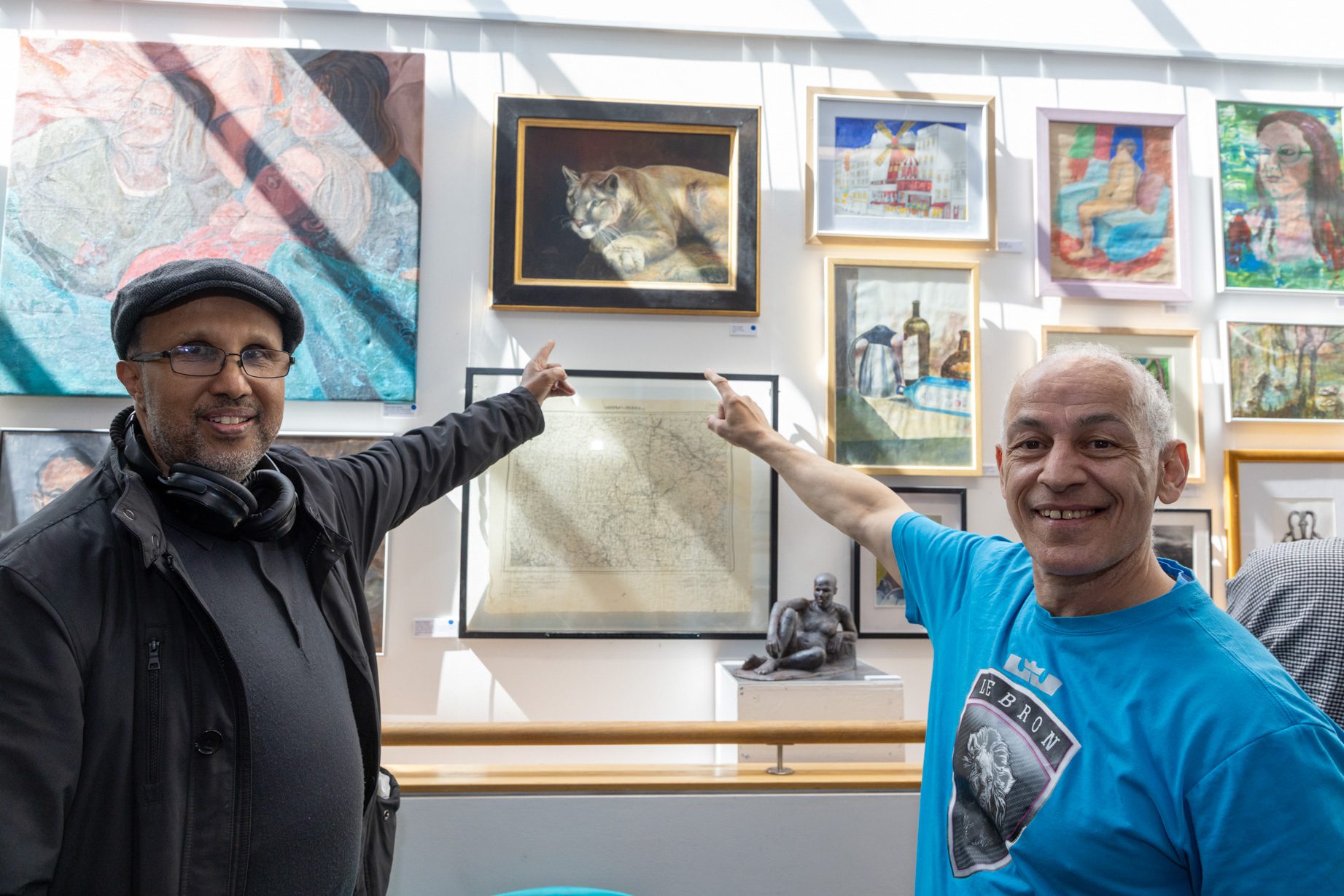
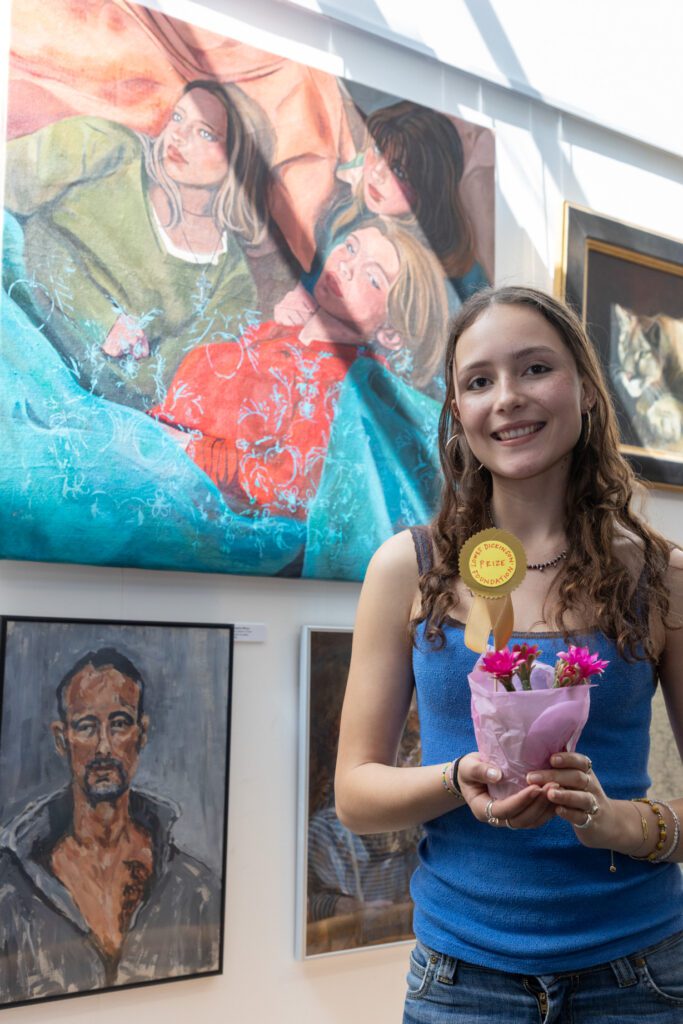
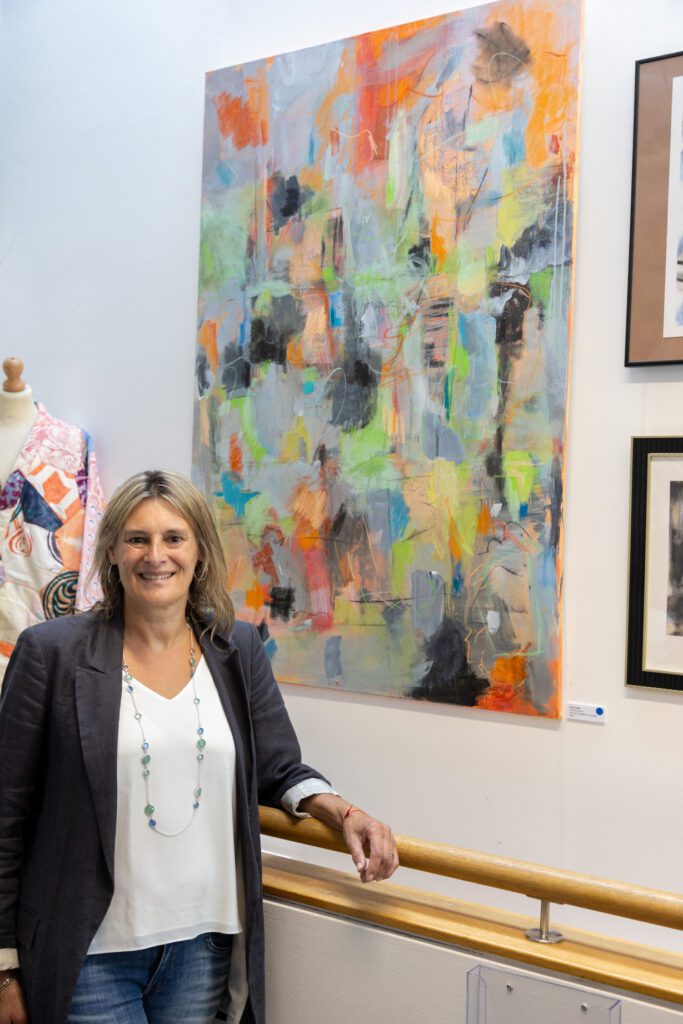
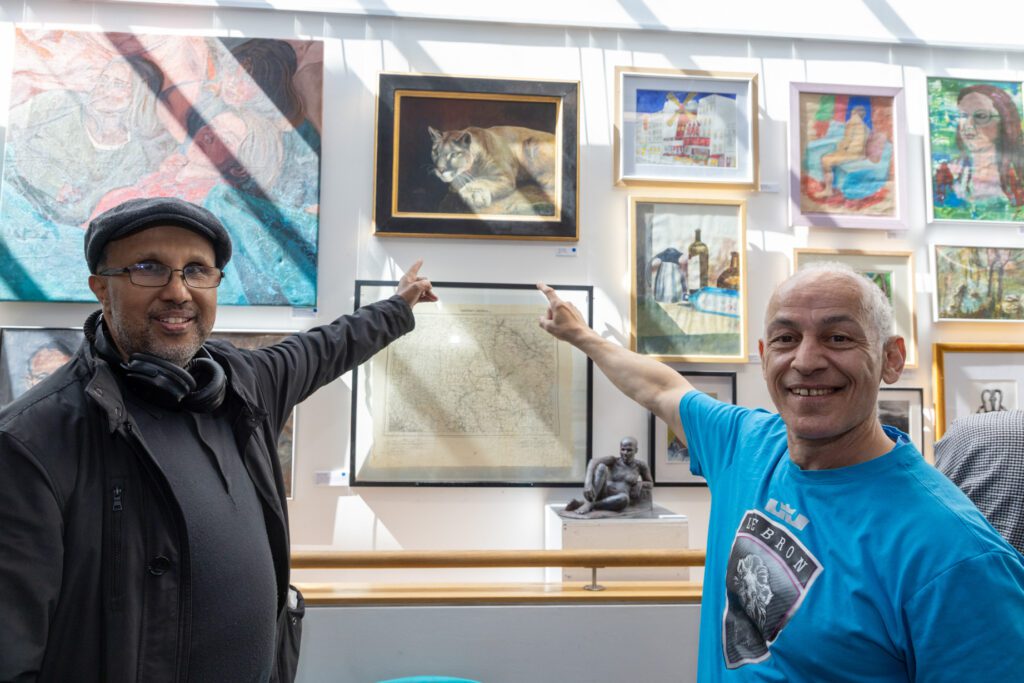
Celebrating Adult Creativity in Camden: WM College Learners Shine at Lowes Dickinson Art Awards 2025 

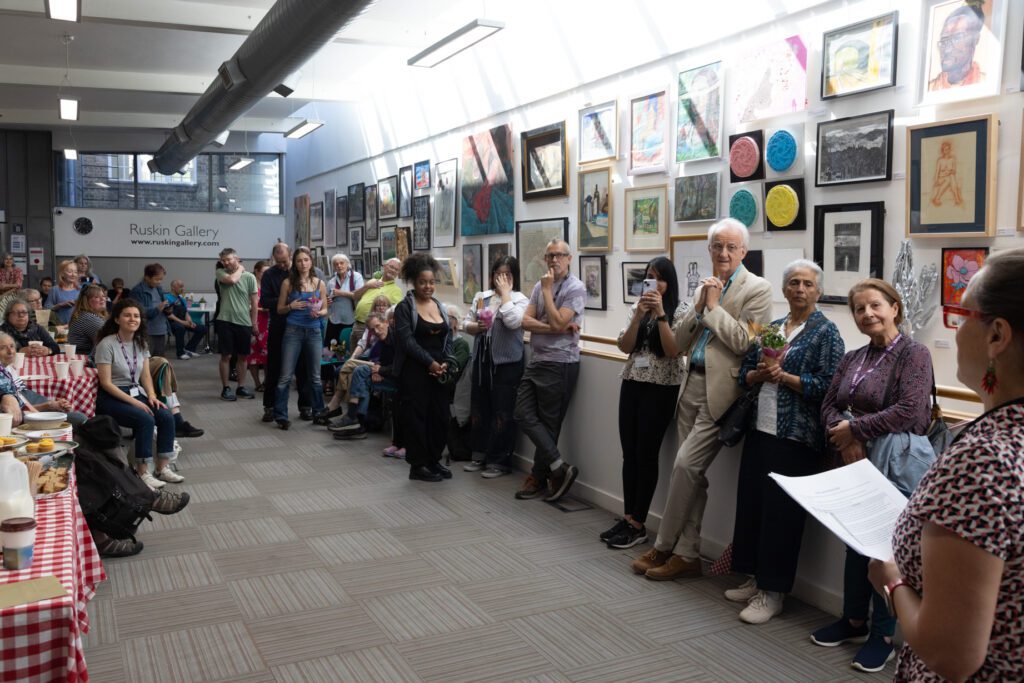
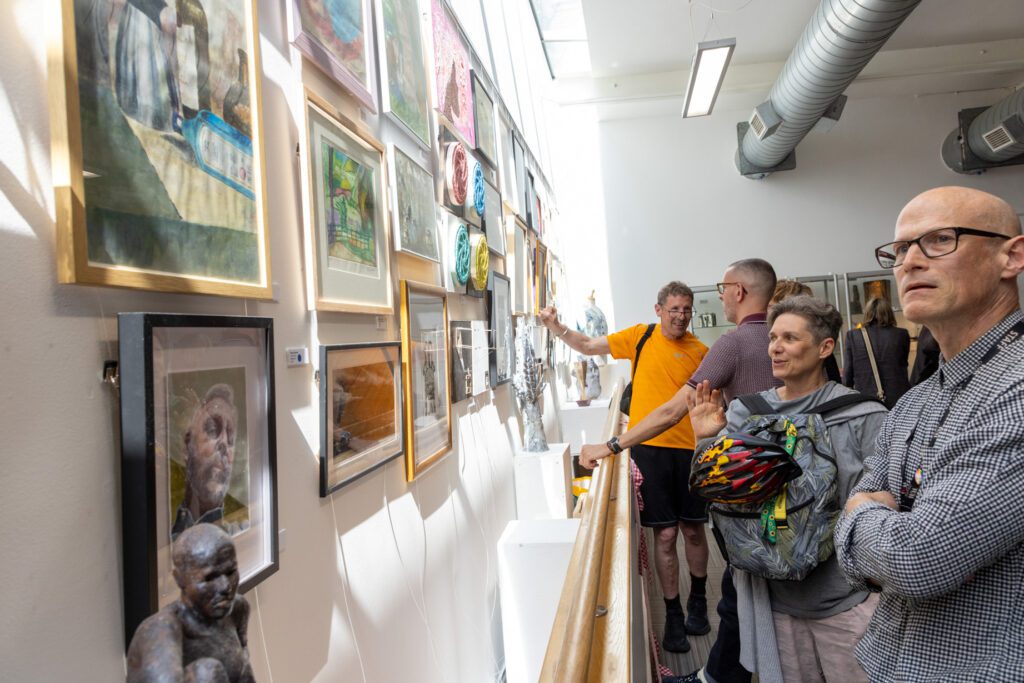
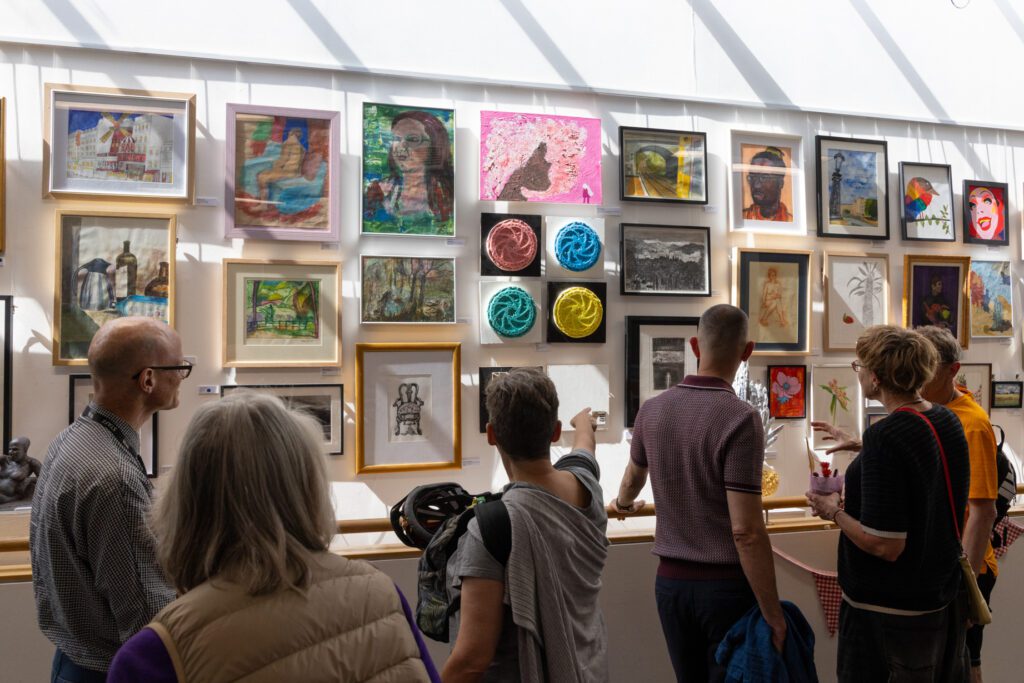
The Ruskin Café Gallery at WM College in Camden was alive with creativity on Saturday, 17 May, as we hosted our much-loved annual Lowes Dickinson Art Awards and Exhibition—a celebration of the incredible talent of our adult learners studying art, design, and crafts in North London. 

Over 150 artworks were submitted by learners from across our ceramics, printmaking, painting, sculpture, textiles, and jewellery courses, demonstrating the rich diversity and passion that defines adult learning at WM College. 

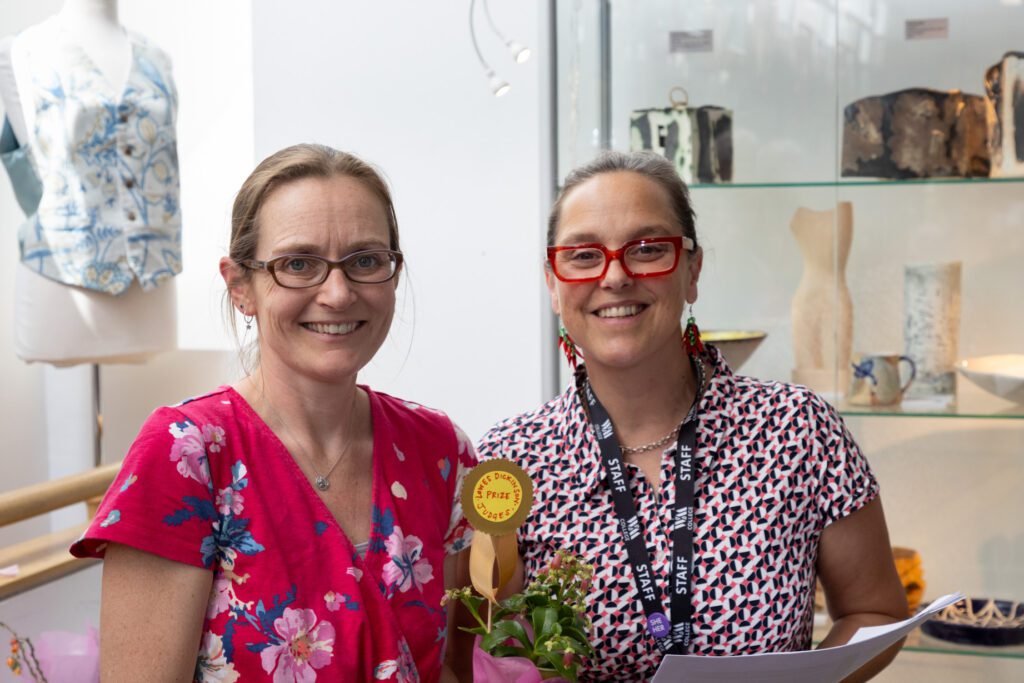
The coveted Overall Prize and Medal was awarded to Hilary Barnes for her stunning print Synchrony, a piece that captivated the judging panel with its atmosphere and environmental focus. A long-standing learner at WM College, Hilary rejoined in 2015 and has since completed a BA and MA in Fine Art and Printmaking. 

Sadly, Hilary was unable to attend the event in person, but her peers and tutors celebrated on her behalf and will ensure the award and messages of support are passed on. 

Judges Inspired by Meaning and Craft

Another standout was the Judge’s Favourite Award, given to Helen Bowe for Winter Walk, a ceramic piece inspired by a walk through Alexandra Palace. Judges praised its evocative textures and atmosphere. 

This year’s event was led with warmth and creativity by Lisa Marklew, our Director of Learning for Arts & Vocational Skills, marking her final time running the Lowes Dickinson Awards before she retires later this year. Lisa’s dedication was evident in every detail—from the handmade bunting to the custom medal featuring Lowes Dickinson and the WM College building, and even the home-baked cakes topped with bespoke marzipan decorations. 

Although Lisa will continue to lead on projects, including the launch of our 170th anniversary mosaic, her last time running the awards was a moment to celebrate not just learner achievement, but the care and community Lisa has brought to the arts programme. 

Speaking about the awards, Dipa Ganguli, Principal, WM College, said:

“It was a real privilege to be part of the judging panel for this year’s Lowes Dickinson Awards. The standard of work submitted was exceptional, and selecting winners from such a rich field of talent was no easy task. I want to offer my heartfelt congratulations to all the learners recognised — and to everyone who submitted work — for their creativity, artistry, courage, and commitment. The imagination and skill on display was truly inspirational. A special thanks to Lisa Marklew, her team, and all supporting staff for curating such a thoughtful and beautiful event. Their hard work shines through in every detail, and the sense of community they’ve built around these awards is genuinely uplifting.” 

Visit the Exhibition This Summer

The Lowes Dickinson Open Exhibition remains open in the Ruskin Café Gallery throughout the summer whilst our bite-sized July Summer courses are up and running. We invite all students, staff, and visitors to drop by and experience the inspiring work created by our adult learners as we close off an amazing 24/25 academic year for the arts. 

Interested in developing your creative skills? 

Explore our Arts and Design Courses in Camden – from printmaking and ceramics to drawing, jewellery, and fashion. 

Short courses across July: 

Need something to inspire and engage you over the summer? Check out our short courses running across July and experience our college community. 

Dementia Action Week 2025

Supporting Adult Learners in North London through Connection and Community.
Written by Caroline Poole, Director of Learner Experience.

This Dementia Action Week (19–25 May 2025), we reflect on the ways WM College supports adult learners across North London—particularly those affected by dementia, either directly or through caring responsibilities for family, friends, or loved ones. 

As one of the longest-standing adult education providers in North London, we understand that dementia isn’t just a medical condition—it’s a lived experience that affects relationships, responsibilities, and everyday life. Many of our learners, especially those on our part-time and community learning courses in Camden, share how important it is to have a safe, welcoming place to learn and reconnect with themselves. 

Adult Education as a Lifeline for Carers and Individuals Affected by Dementia 

Joining one of our many adult learning courses in London is about much more than gaining qualifications. For some, it’s a space to step away from caring duties; for others, it’s a way to stay mentally active, socially connected, and emotionally supported. 

Whether it’s through a creative course, an IT class, or a mindfulness workshop, adult learning offers our North London community a chance to stay engaged and connected. We see daily how this improves wellbeing, not just for learners, but also for their families. 

A Community That Cares

Our learners come from all walks of life—many are older adult learners, carers, or individuals with changing health needs. What unites them is a desire to keep growing, learning, and connecting. 

At WM College, we provide more than just inclusive adult education—we offer compassion, community, and a deep understanding of the challenges our learners face. Our learner support and safeguarding teams are here year-round to help anyone who needs guidance or simply someone to talk to. 

Trusted Dementia Support Resources

If you or someone you know needs extra support, here are five trusted organisations in the UK that offer dementia-specific advice and care: 

  1. Alzheimer’s Society – alzheimers.org.uk 
  1. Dementia UK – dementiauk.org 
  1. Age UK – Dementia Support – ageuk.org.uk 
  1. NHS Dementia Guide – nhs.uk/dementia 
  2. Carers UK – carersuk.org

If you’d like help connecting with any of these services or want to learn how WM College can support you through education, please contact our safeguarding or learner support teams. 

Let’s Keep Building a Compassionate and Inclusive Learning Community

We’re proud that our inclusive adult education in North London helps people find space, strength, and support, especially during challenging times like caring for someone with dementia. 

Let’s continue to learn, grow, and support each other.

WM COLLEGE
44 Crowndale Road
NW1 1TR
Tel: 020 7255 4700
Email: learnerservices@wmcollege.ac.uk