
To celebrate 170 years of WM College’s vibrant educational legacy, Level 2 Illustration learners were invited to take part in a unique live brief to design a large-scale mosaic for permanent display in the college garden. Delivered in collaboration with the acclaimed Hackney Mosaic Project, this initiative allowed learners the chance to bring their creative ideas to life as part of a lasting public artwork.
The brief was more than an academic assignment; it was a live commission. Learners worked under the expert guidance of renowned mosaic artist Tessa Hunkin and received professional feedback from WM College Principal Dipa Ganguli, who served as the project’s client. From research and concept development to fabrication, learners participated in every stage of the design process.
Tools, Tiles, and First Impressions
The Mosaic Workshop
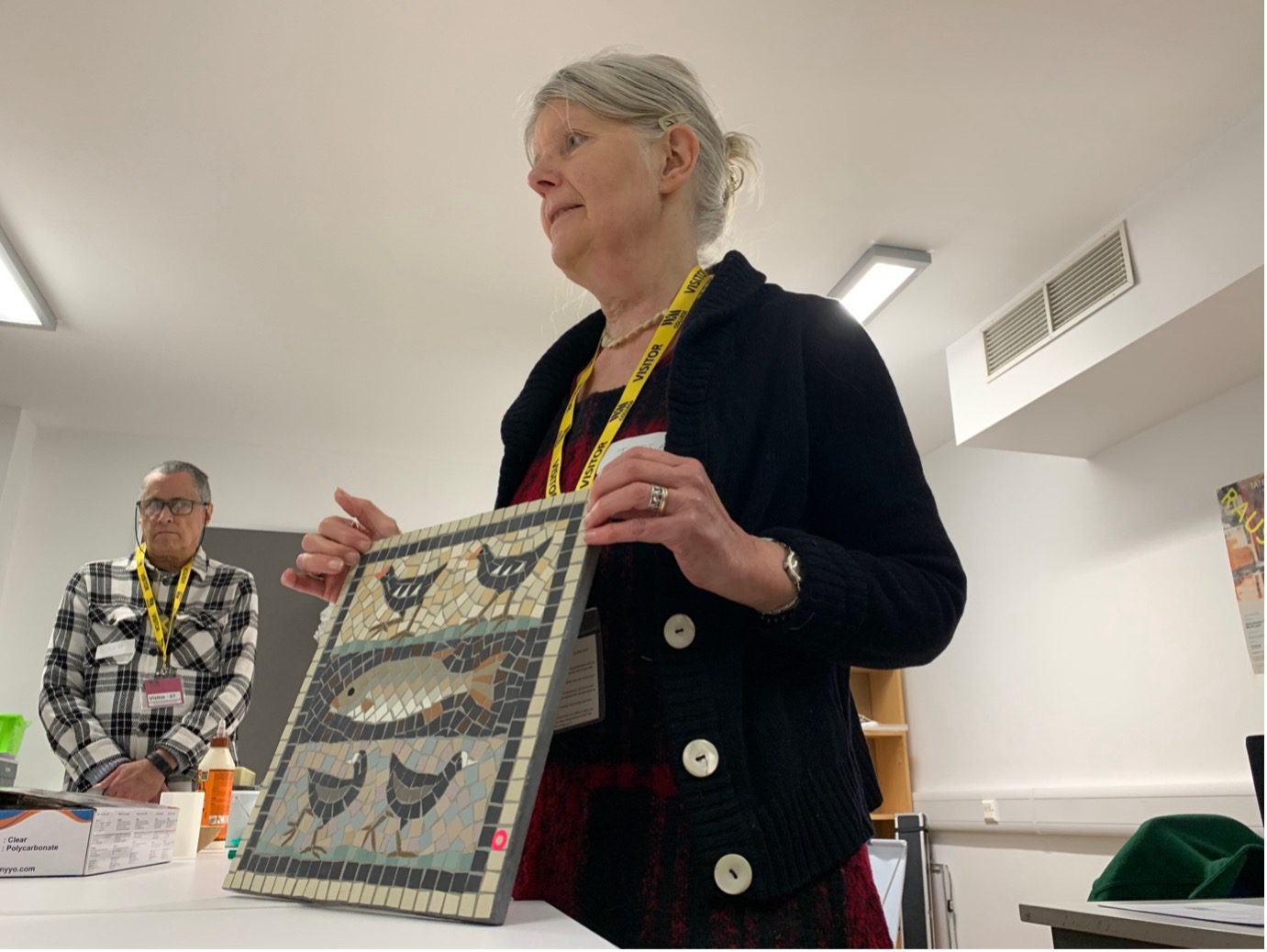
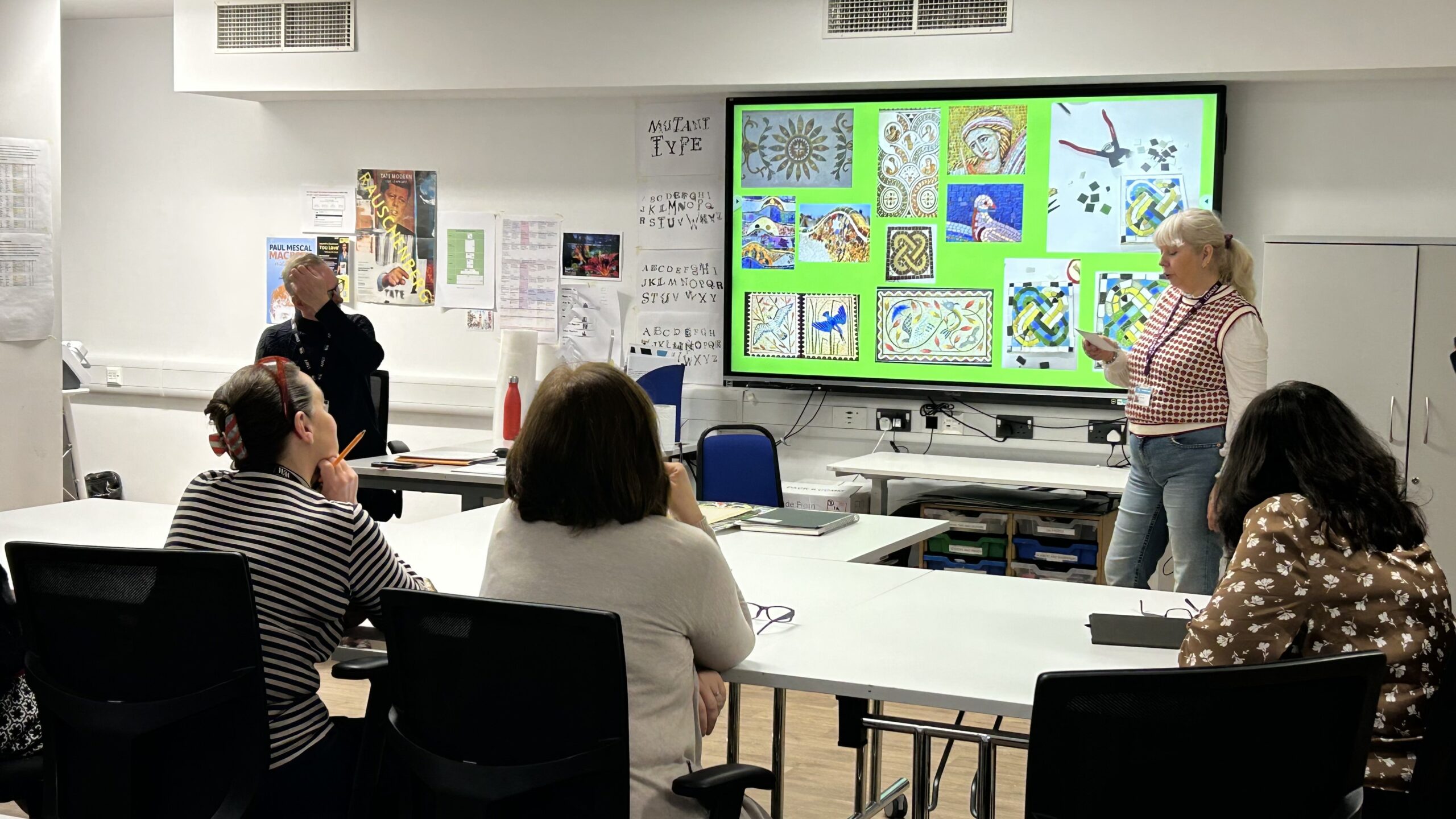
The project kicked off in January with an inspiring session led by Tessa Hunkin, who introduced learners to the mosaic medium through a rich blend of presentation, demonstration, and practical experimentation. Held at WM College, this half-day workshop gave learners a comprehensive introduction to the art of mosaic-making, setting the stage for the months ahead.
Tessa began the session with an engaging talk, sharing examples of her own public artworks and walking learners through the history and application of mosaic as both a decorative and storytelling medium. She discussed the creative possibilities and physical constraints of mosaic work, helping learners understand how image, colour, and form are translated through small pieces—called tesserae—into larger, cohesive designs.
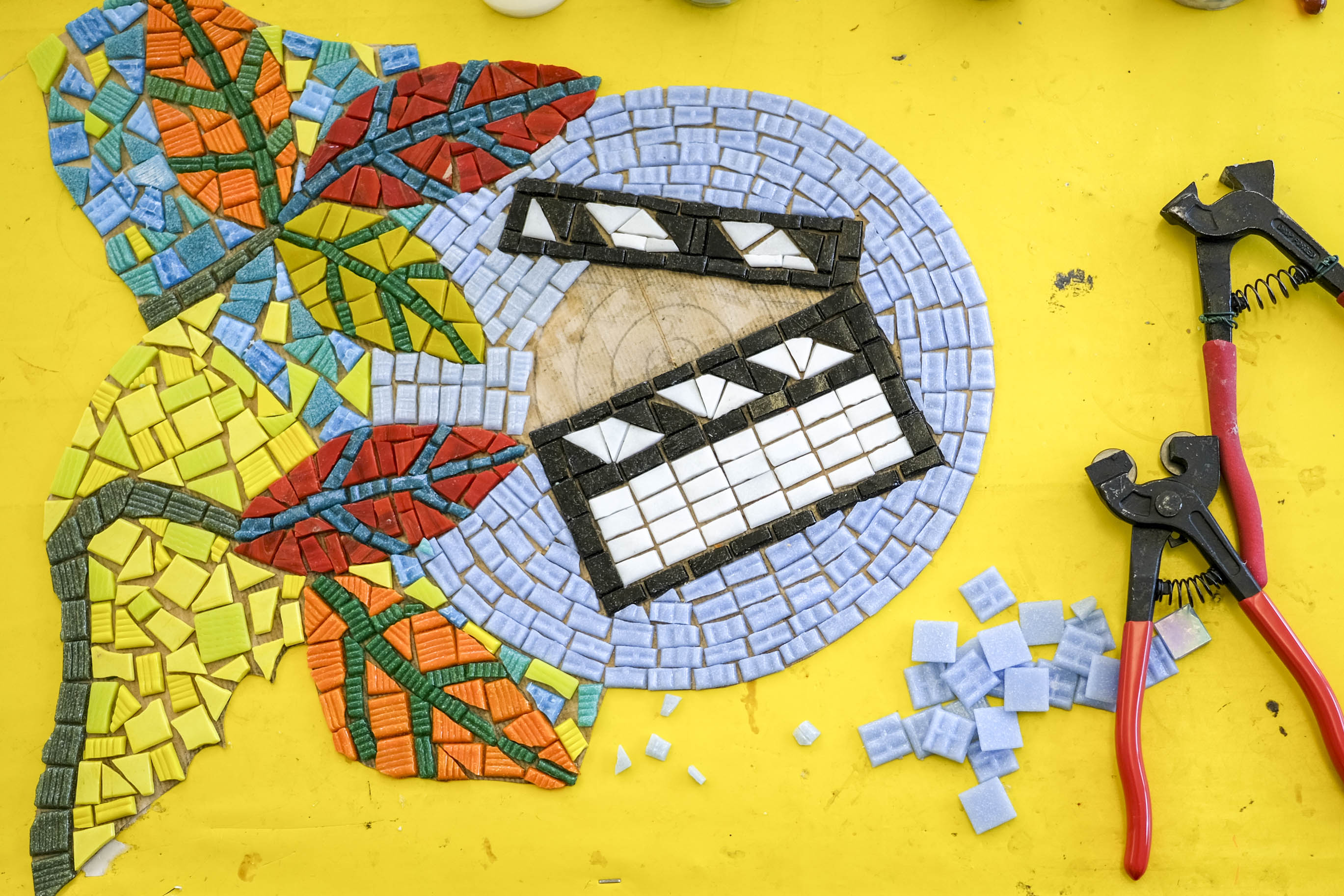
Following the talk, learners moved into the practical stage of the session. Tessa demonstrated essential mosaic techniques, including how to safely and effectively use cutting tools to shape ceramic and glass tesserae, how to plan out a design that works with the natural flow and rhythm of the materials, and how to consider spacing, grouting, and texture in their compositions. Learners were introduced to the importance of selecting appropriate colours, finishes, and tile sizes to suit different elements of a design, such as backgrounds, outlines, or focal motifs.
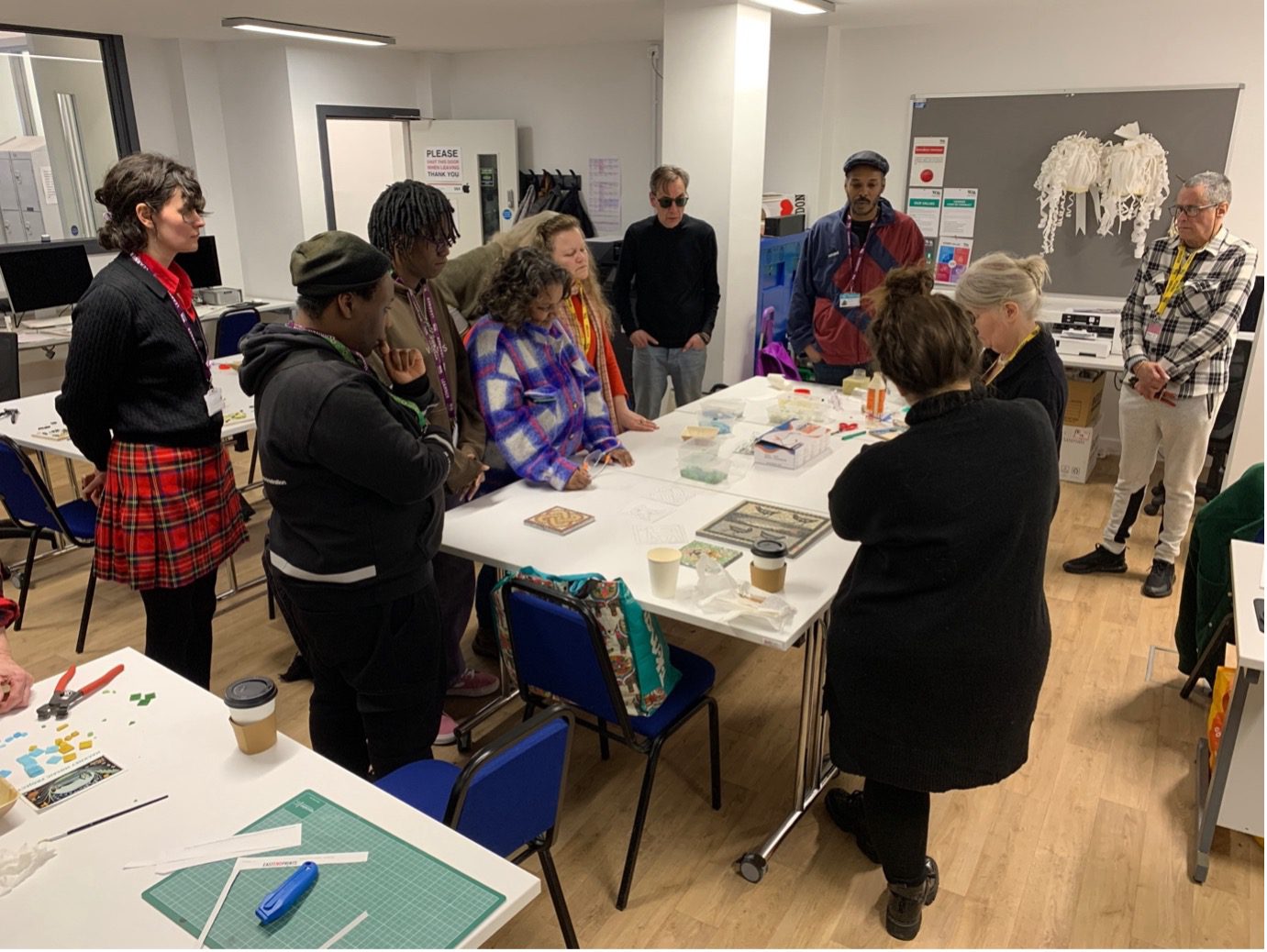
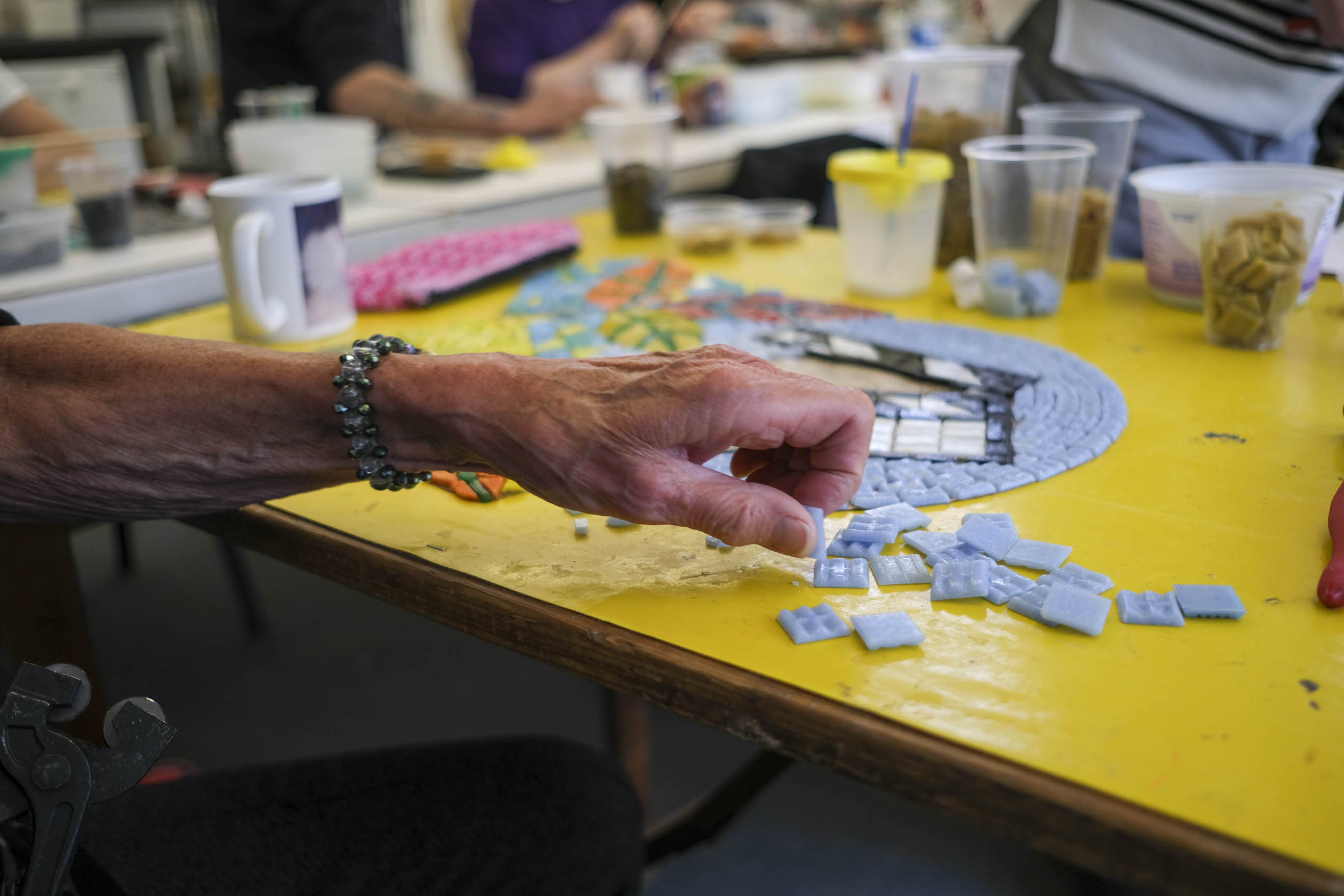
Each learner then had the opportunity to create a small individual mosaic panel. This hands-on task was a vital part of the learning process, allowing learners to experiment with colour choices, cutting techniques, and placement strategies. It also gave them direct insight into the tactile, physical nature of mosaic-making—something that would inform their later design choices for the main project.
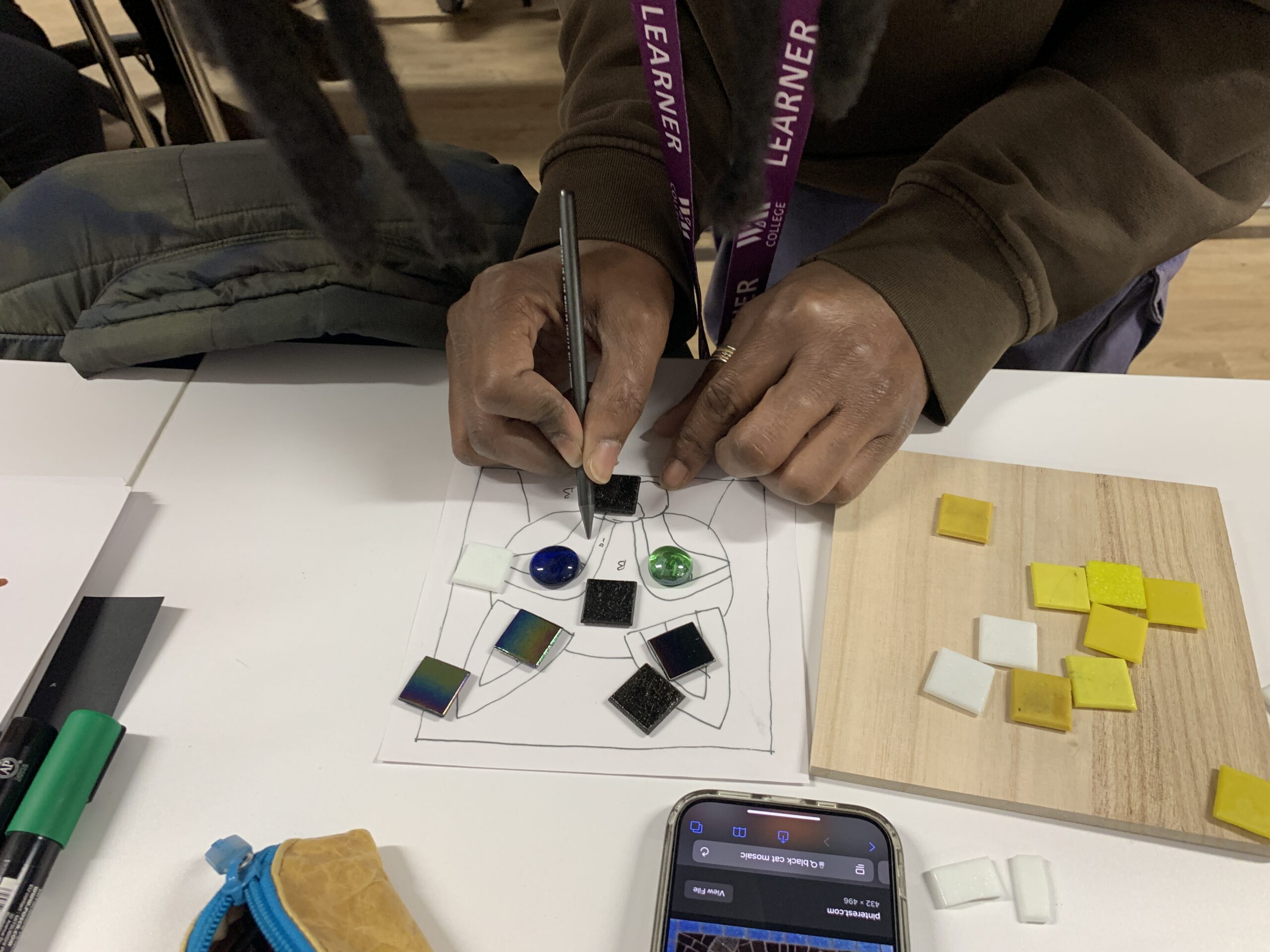
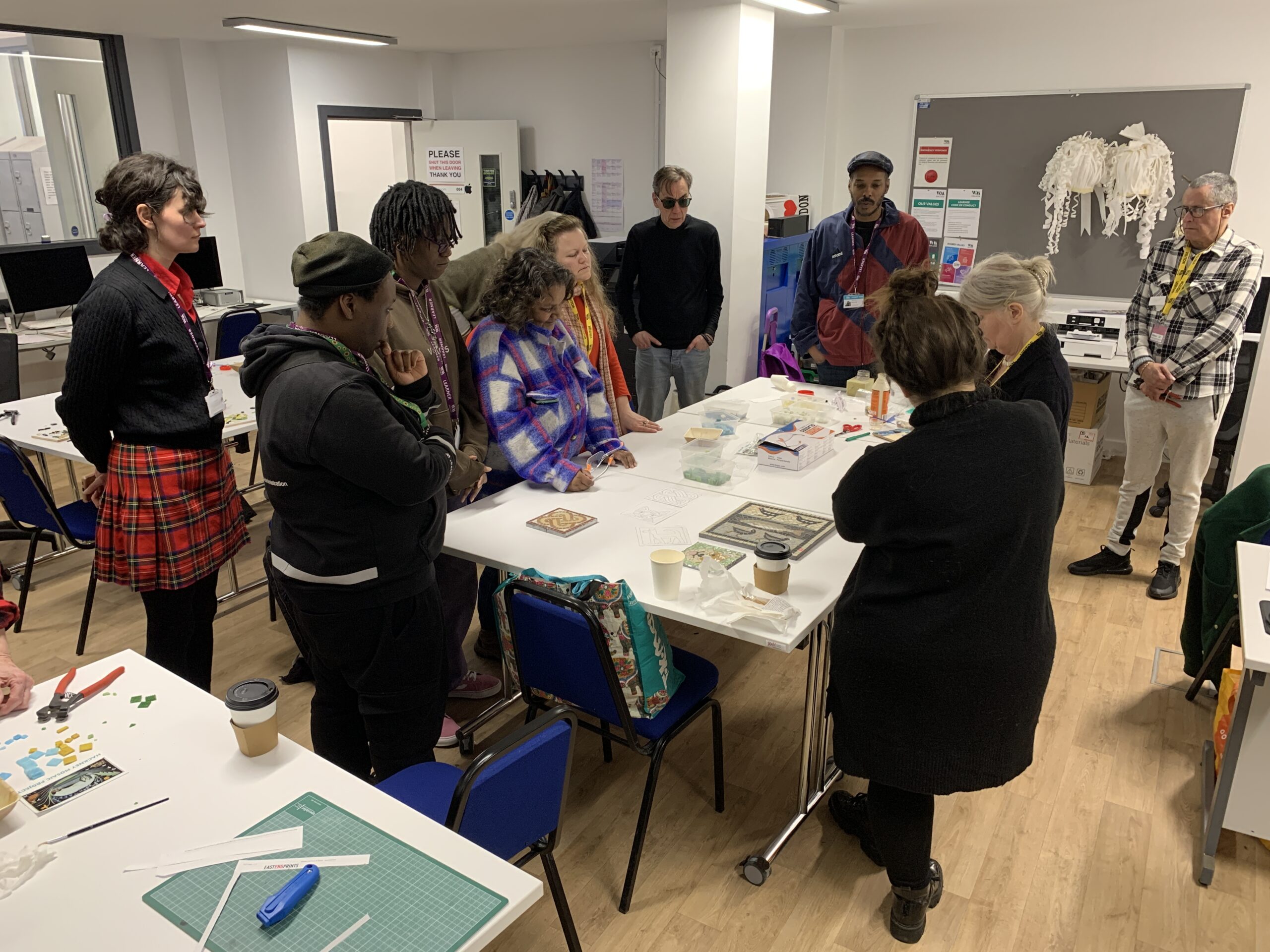
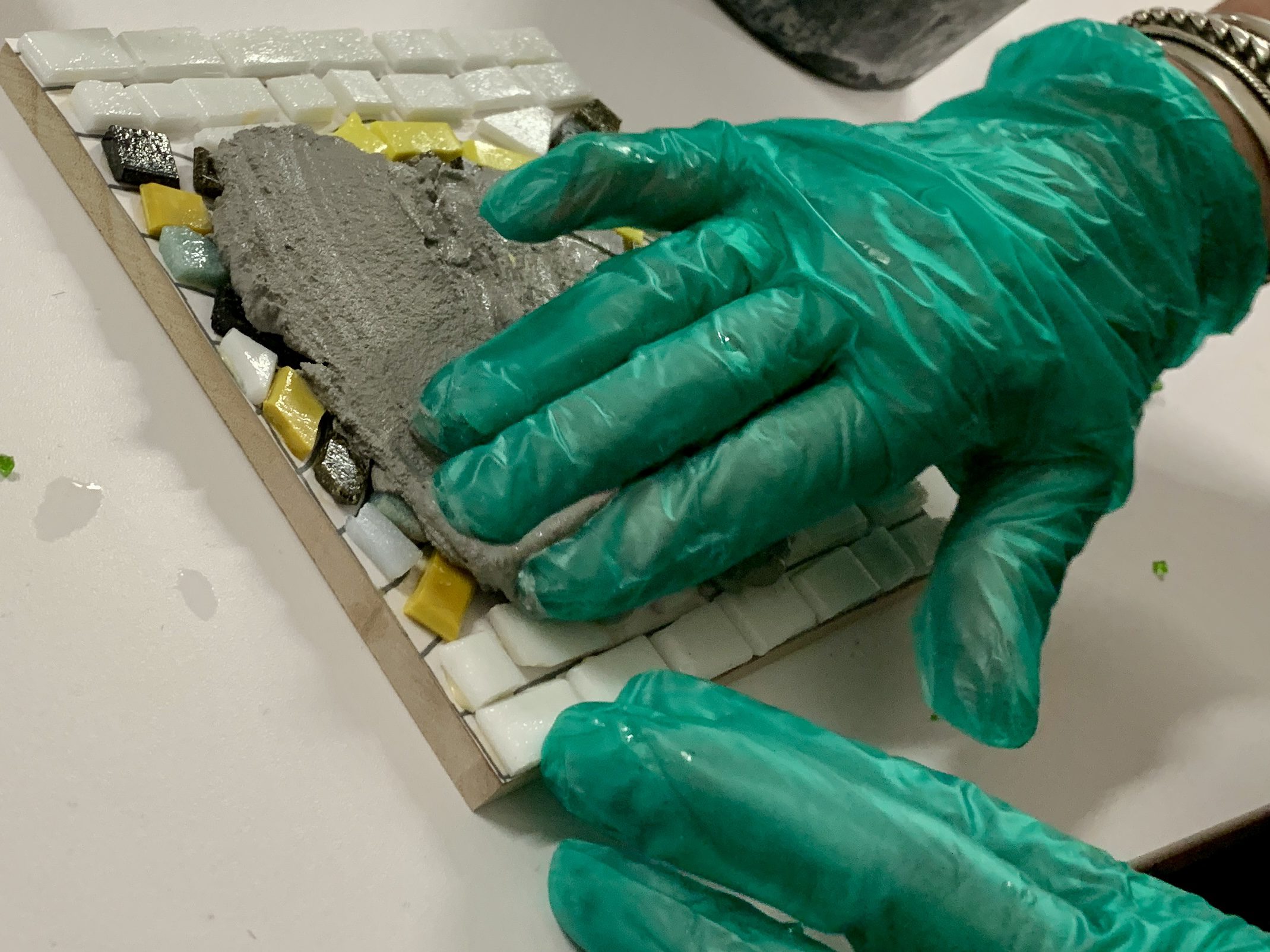
The process of completing these sample panels helped learners better appreciate the demands of the medium. They began to understand how subtle differences in tile shape and grout line can affect the clarity and impact of an image. For many, it was the first time working with such materials, and the session helped demystify what can be a complex and highly skilled craft.
This early encounter with real-world techniques gave learners both the confidence and foundational knowledge needed to embark on their own designs for the college mosaic. It also introduced them to the collaborative nature of mosaic work—where individual pieces come together to create a shared vision—mirroring the core themes of community and celebration at the heart of the brief.
Silvia Viera found the experience especially motivating: “Learning the mosaic techniques was very rewarding. I even started researching and experimenting with mosaic outside class.” Mimoza reflected on the joy of discovering a new medium: “It was exciting to see how we all approached the brief differently but came together through the process.”
Research & Development
Exploring WM College’s Themes
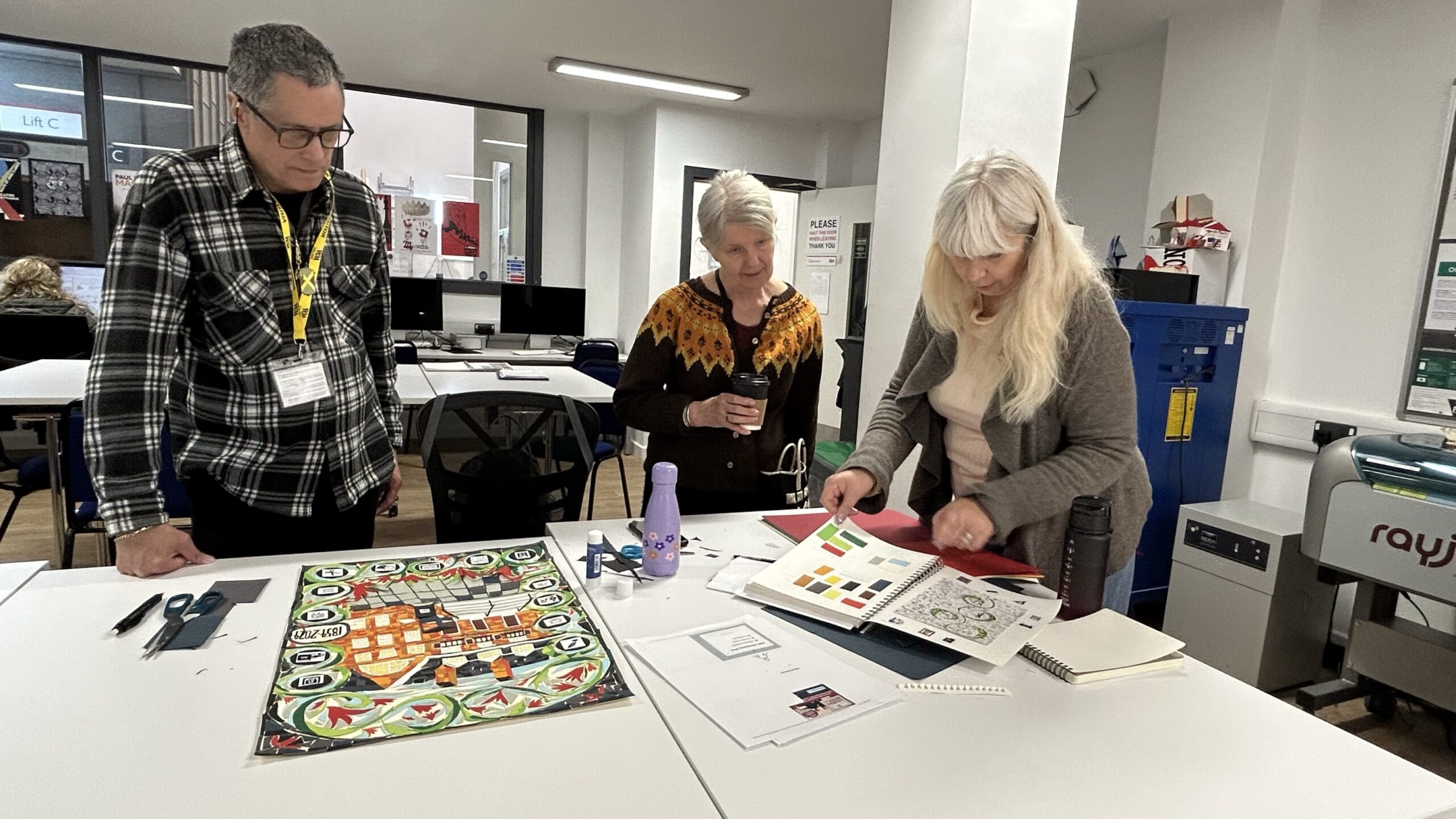
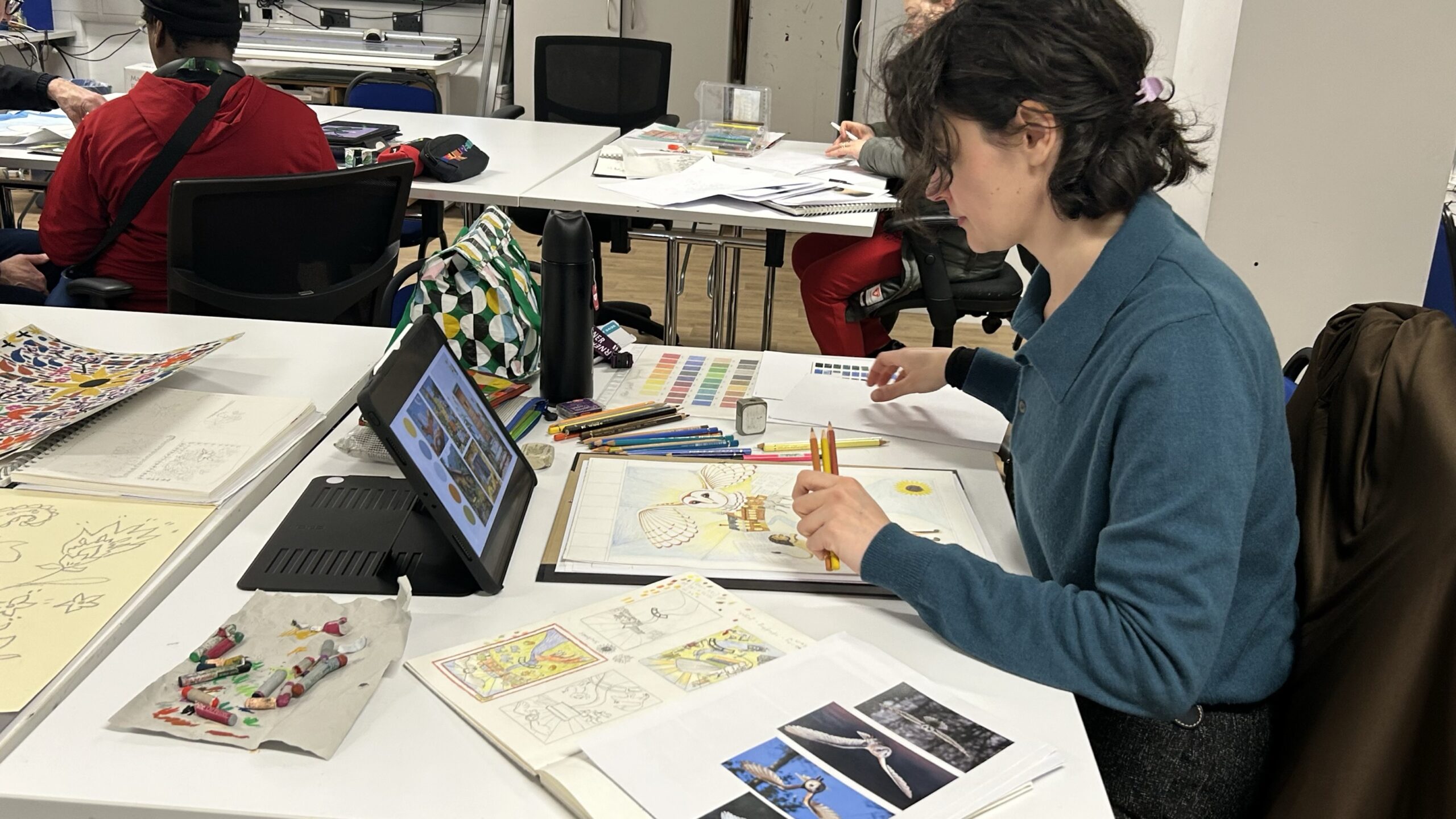
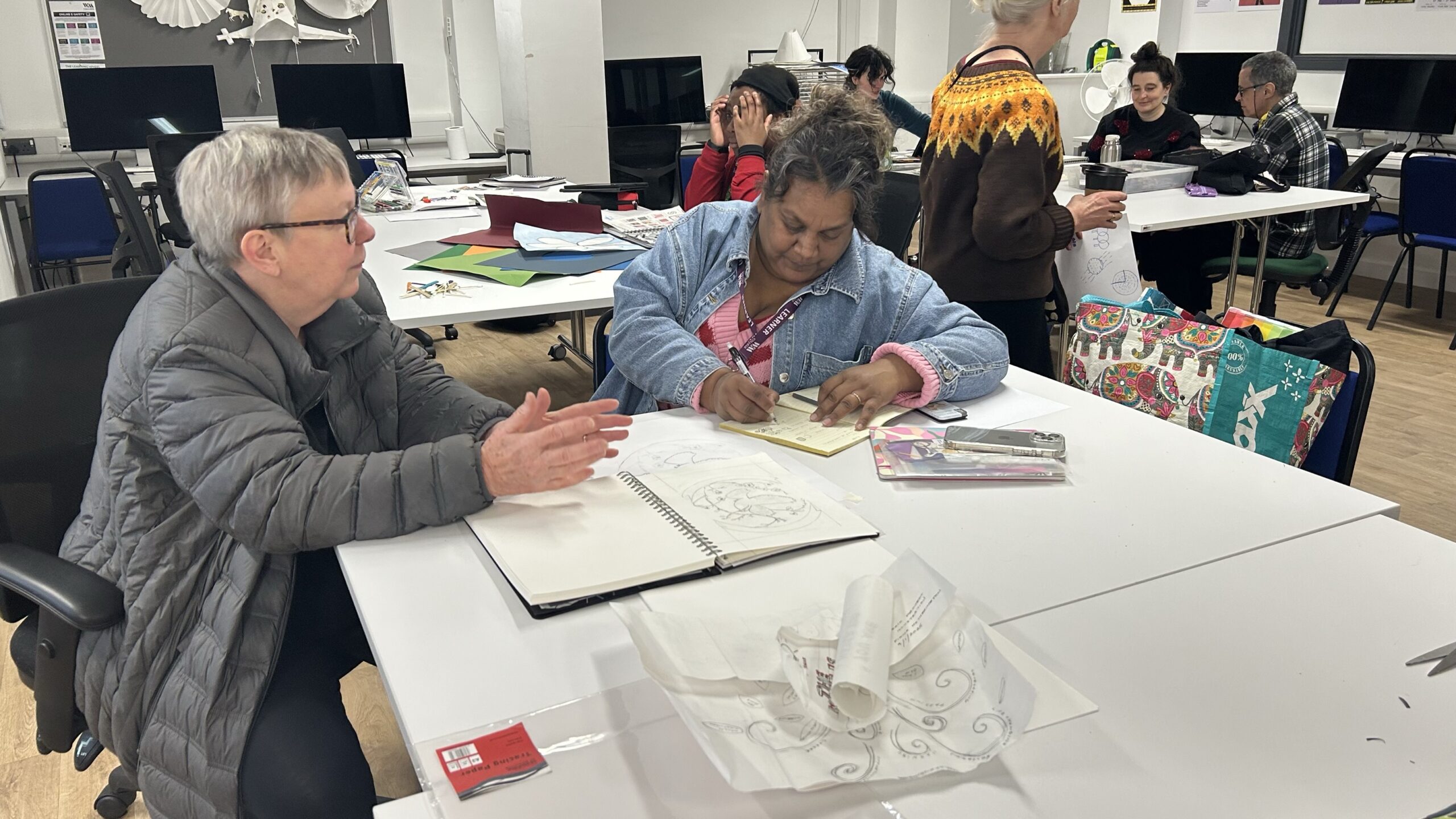
Learners explored themes of community, education, life-long learning, and celebration, grounding their ideas in both personal experience and historical research. Visits to the college archive helped them better understand the institution’s legacy.
Jason noted: “I enjoyed learning about the history of the college, it gave my design more meaning and made me feel part of something important.”
Design Progression
From Ideas to Proposals
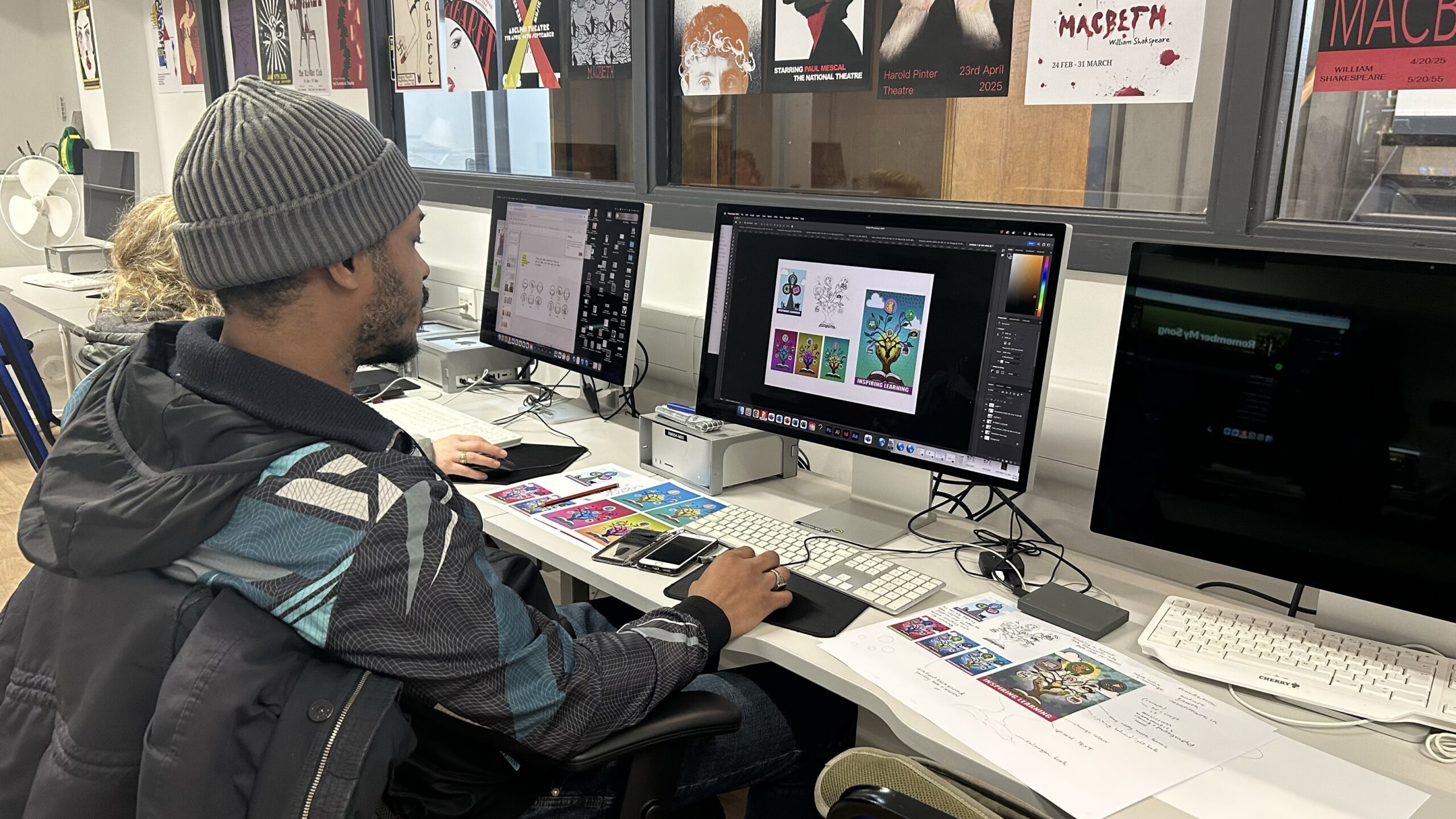
Learners developed a range of visual concepts, exploring digital and hand-rendered methods to express their ideas. The process included colour testing, composition refinement, and mid-project feedback from Tessa Hunkin to push designs further.
Elisa shared how the process changed her creative thinking: “I had to consider the story I was telling, not just how it looked. It pushed me to think like a designer.” Bernice reflected: “The feedback pushed me to rethink my choices—I wasn’t sure at first, but I ended up creating something I felt proud of.”
Presentation Day
A Professional Pitch
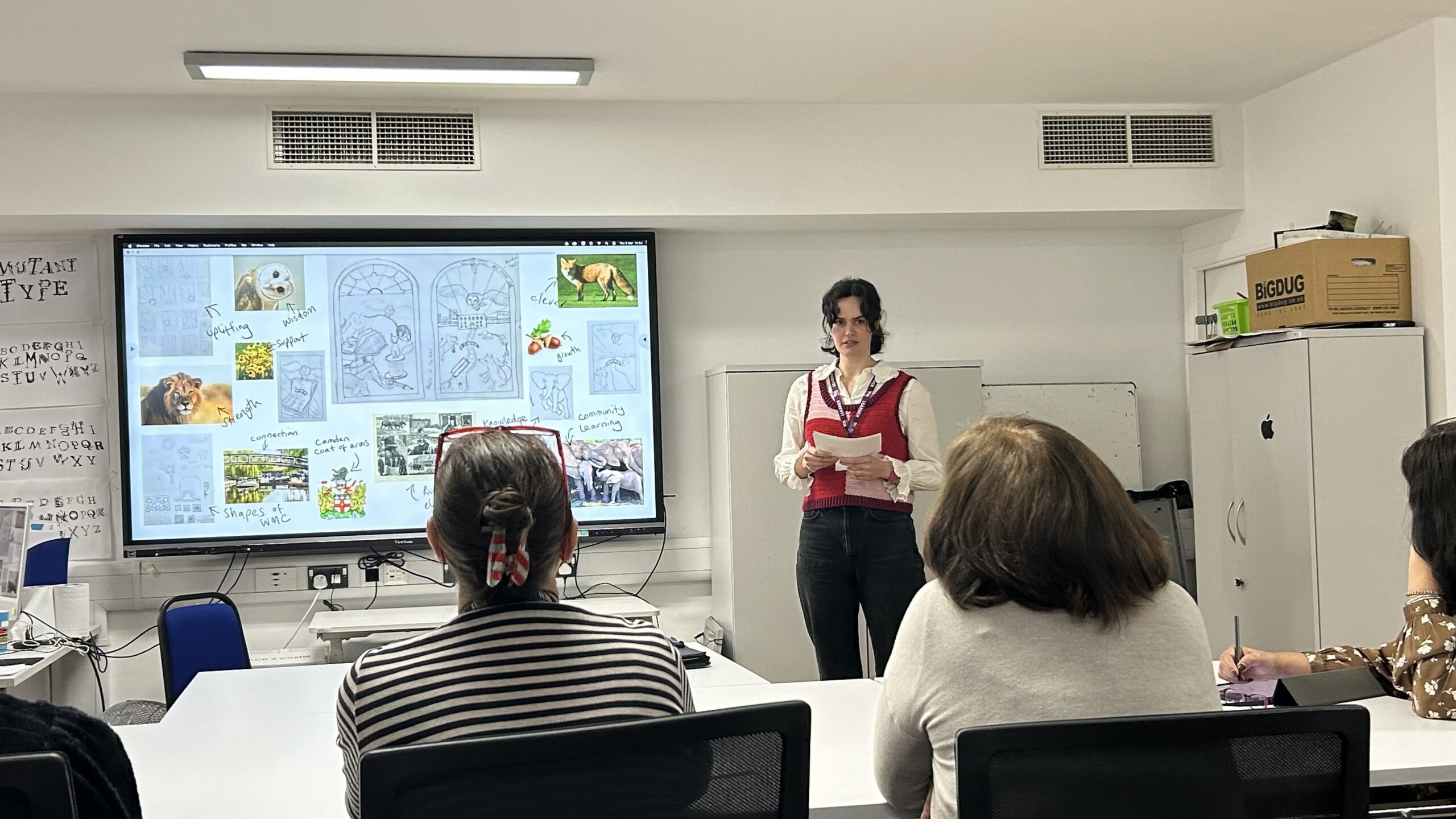
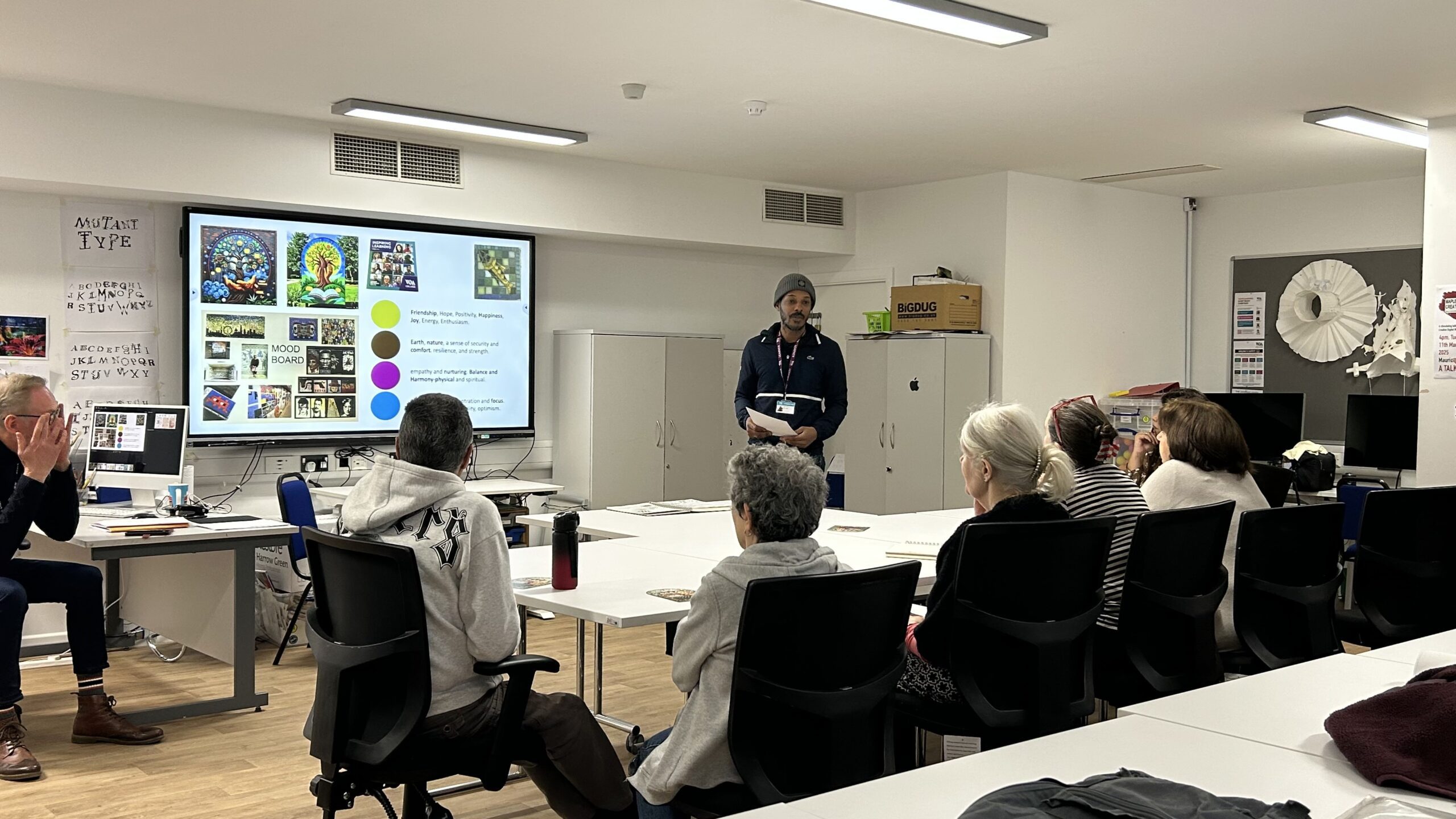
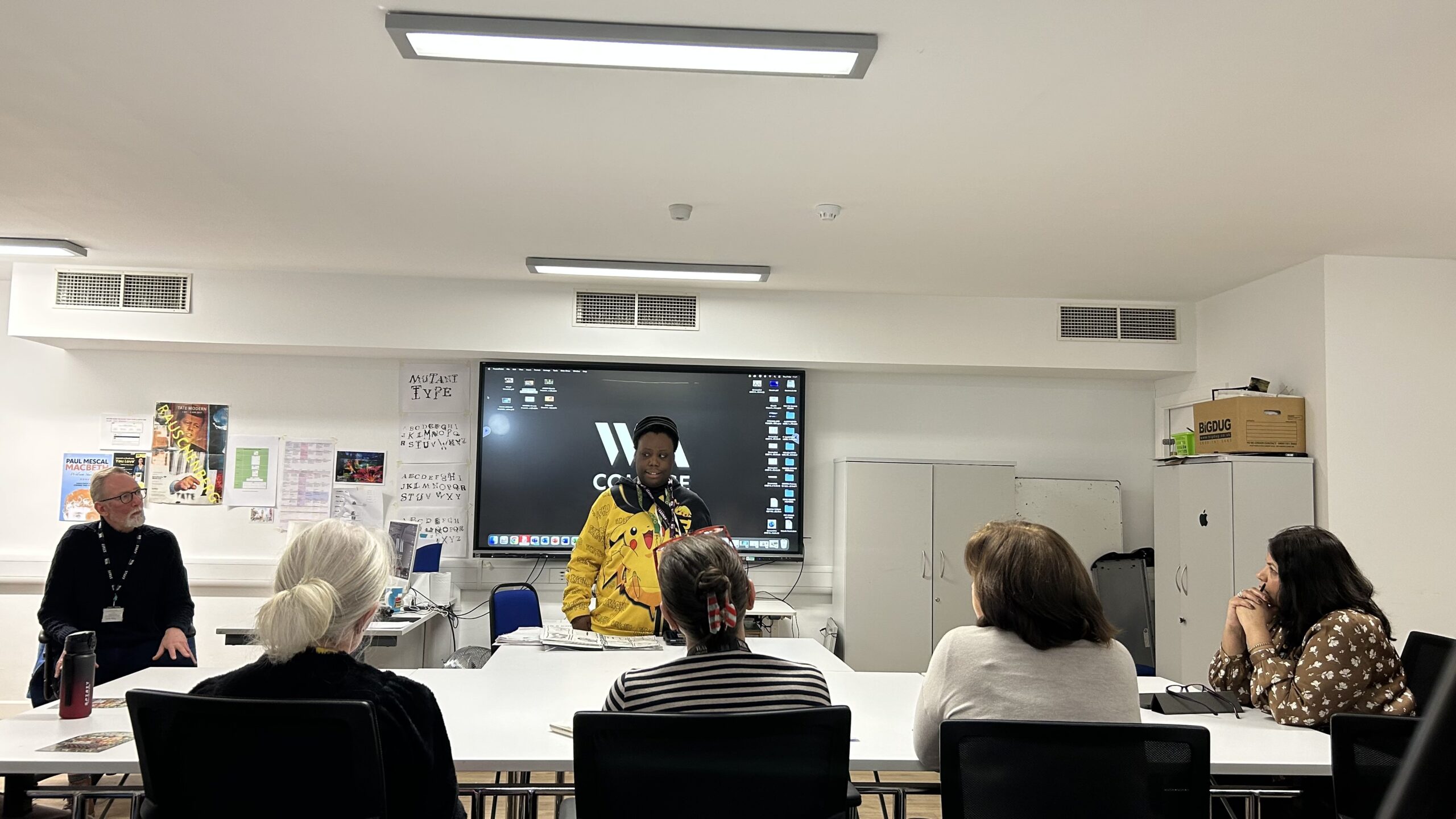
Learners pitched their final concepts to a panel including Tessa, Dipa, and Hackney Mosaic Project volunteers in late February. This formal presentation marked an opportunity to practice professional skills in client communication and design justification.
Silvia described the experience as transformative: “This helped me present my ideas in a clear and organised way—I now feel more prepared for real client scenarios.” Elisa added: “This wasn’t just about having my design chosen—it was about producing something that represented the kind of work I want to do going forward.”
Fabrication at Hackney Mosaic Studio
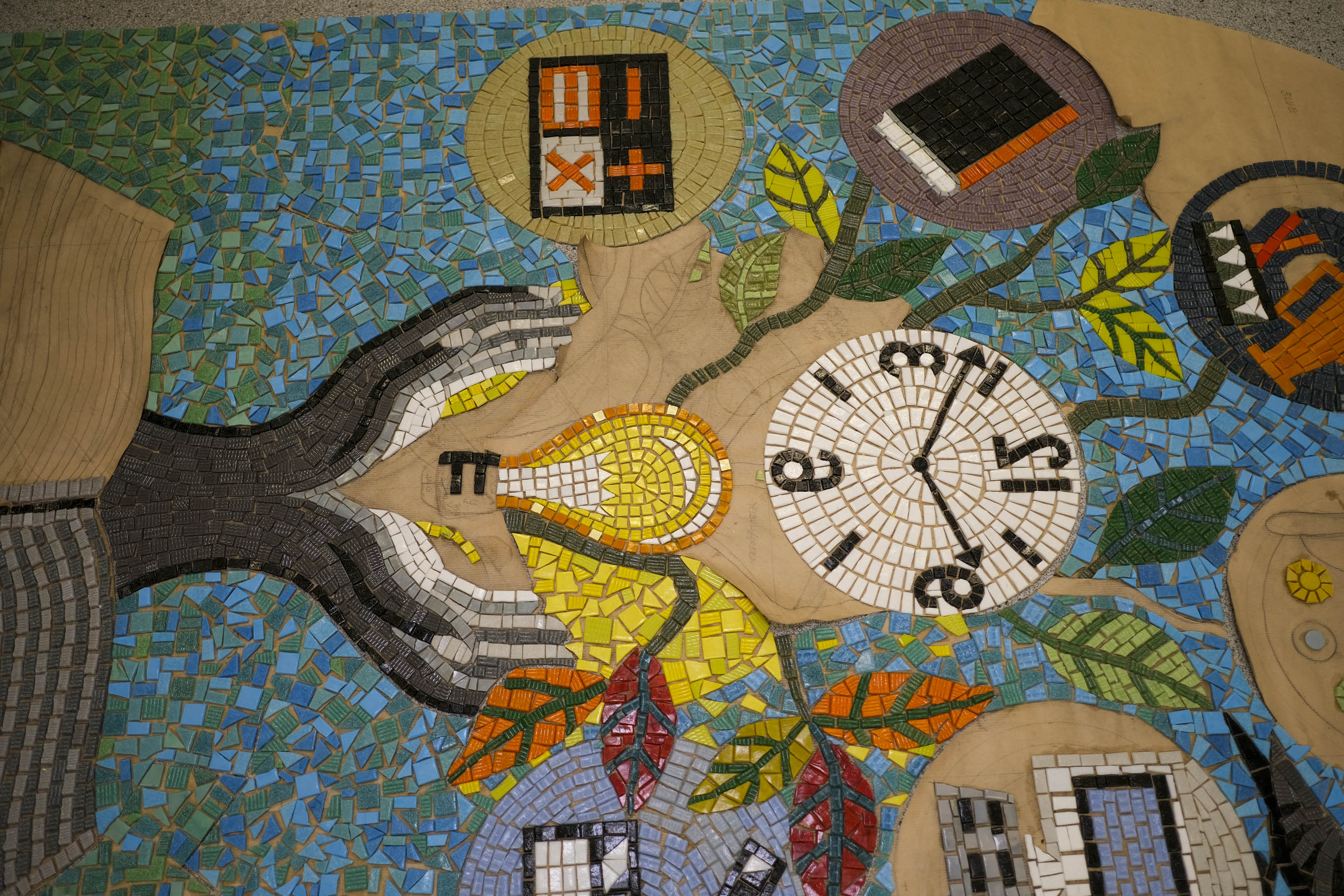
In March, selected learners assisted in scaling up and assembling the final design at Hackney Mosaic’s East London studio. They worked alongside professional volunteers, experiencing the intricate process of constructing a public mosaic.
Jason noted: “Helping with the fabrication gave me a new appreciation for how much time and teamwork is involved.”
Reflections & Legacy
This live brief provided learners with hands-on experience in both creative and professional skills—developing concepts, responding to feedback, presenting to clients, and contributing to a real-world community artwork. As Silvia put it: “I’ve learned my strengths and weaknesses, and that will help me better prepare for interviews and future work.”
Bernice concluded: “Even if my design wasn’t chosen, I gained confidence, communication skills, and a clearer sense of how to work to a brief.”
The completed mosaic has now been installed in the college garden, a vibrant, permanent symbol of collaboration, creativity, and community spirit. It stands not only as a celebration of WM College’s 170-year journey but as a testament to the learners who brought it to life.
Support WM College by Making a Lasting Difference
Your donation will help us provide bursaries for low-income learners, invest in sustainable initiatives, and support the upkeep of our historic Grade II listed building. By contributing, you’ll be helping to preserve a vital community space, expand access to adult education, and support those who need it most. Every donation brings us closer to ensuring opportunities and inspiration for our learners and the wider community.